Bilge Pumps, Float Switches and Washdown Pumps for Boats

Victory Parts stocks 12V bilge pumps from 360 through to 1100, in both standard and automatic versions, alongside the float switches, strainers, plumbing kits and hose that turn a pump into a working system. The range also covers washdown and deckwash gear, live bait pumps, freshwater pumps and macerator pumps, so you can sort the whole boat out in one order. Everything below is held in Australian stock at our Sunshine Coast facility and shipped Australia-wide.

Sort by
Part Type
Part
Show more
Part Number
Brand
Brand Tag Filter
Show More
Year
Horse Power
Horse Power
Show More
Price
Product Price Filter - slider
$11$483

Shop By Engine Type

Engine Type
VP140

Original price was: $26.46.Current price is: $26.46.

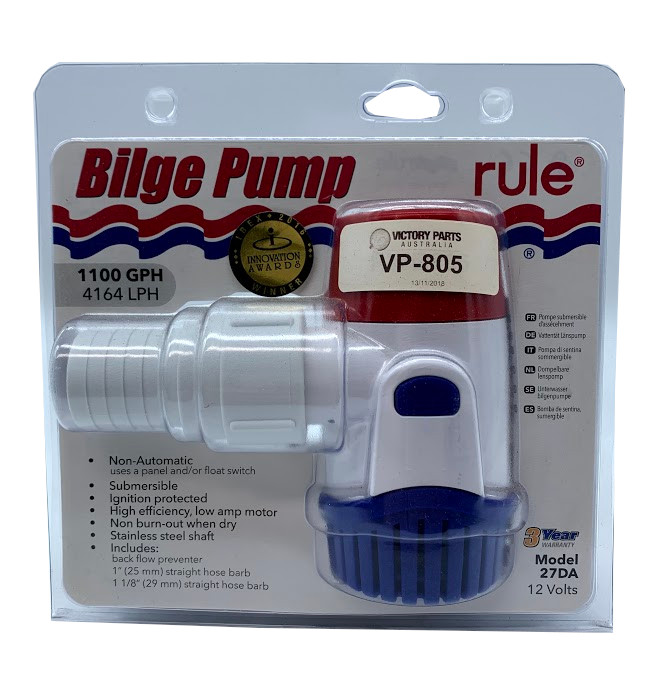
VP805

Original price was: $133.71.Current price is: $133.71.

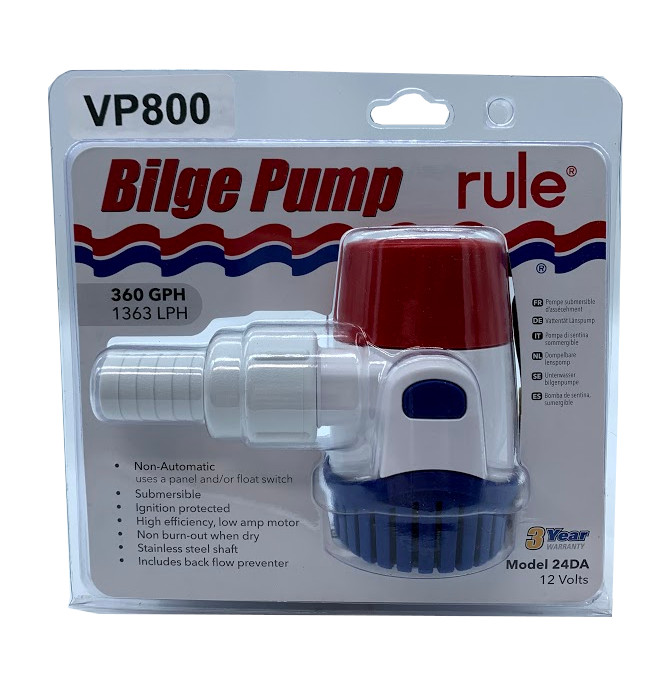
VP800

Original price was: $67.93.Current price is: $67.93.

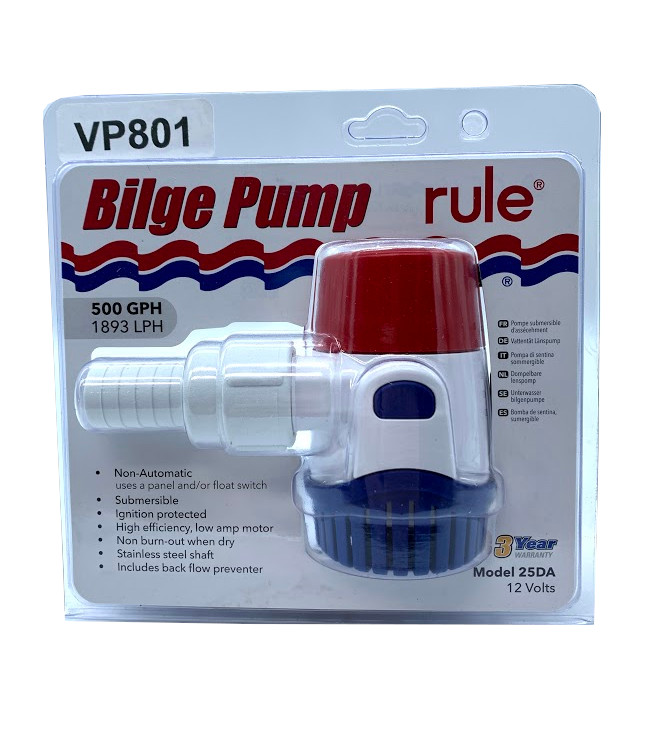
VP801

Original price was: $90.09.Current price is: $90.09.

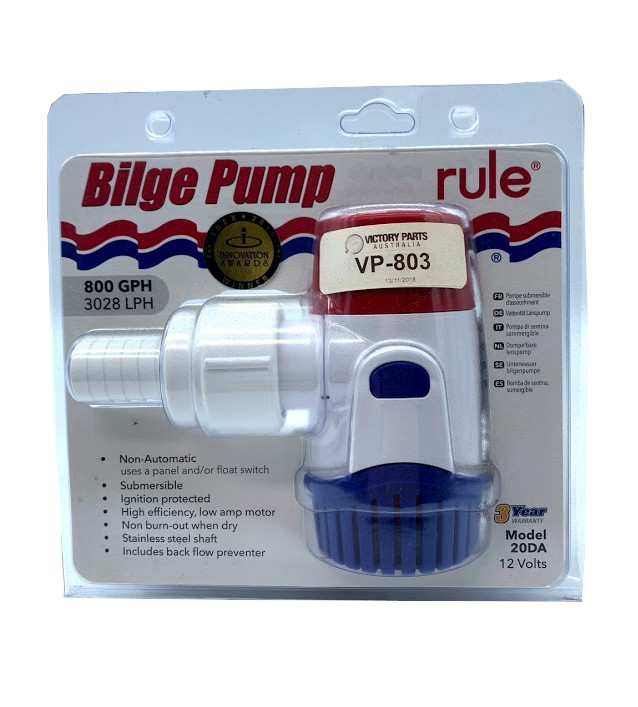
VP803

Original price was: $84.37.Current price is: $84.37.

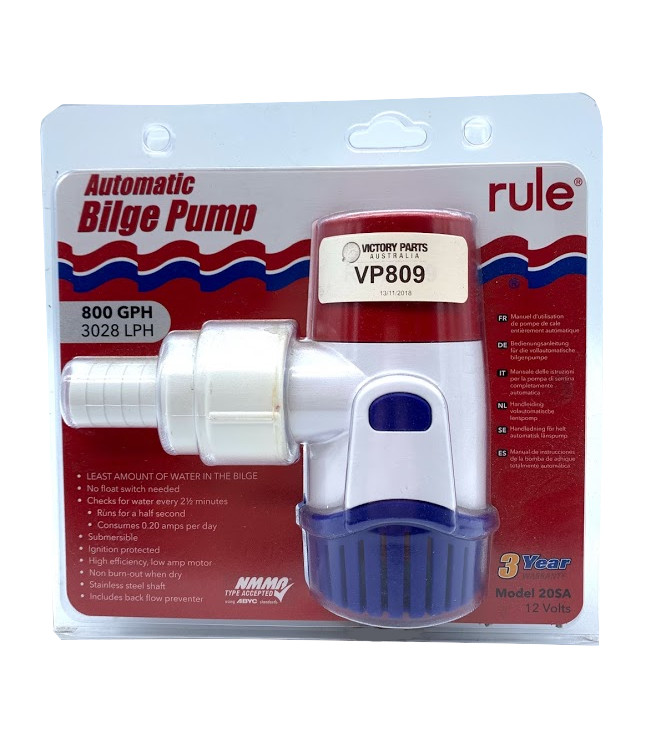
VP809

Original price was: $294.58.Current price is: $294.58.

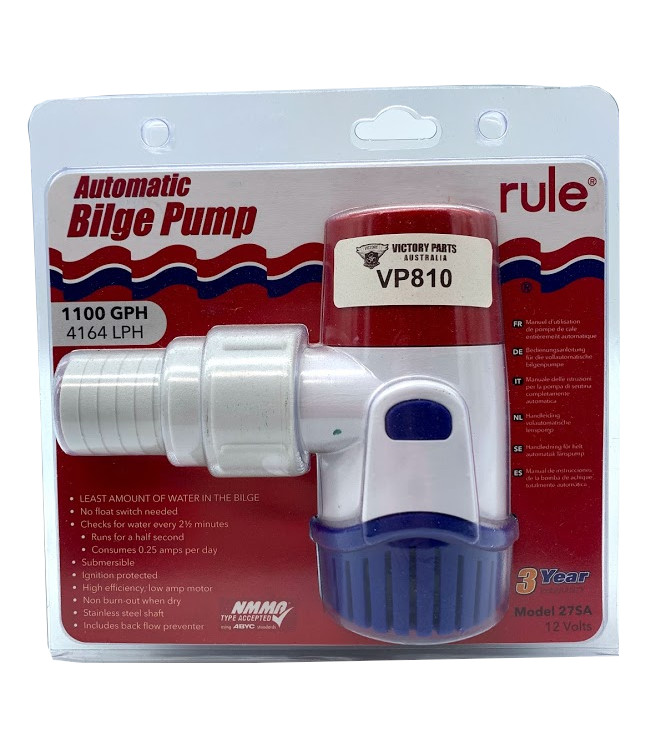
VP810

Original price was: $358.93.Current price is: $358.93.

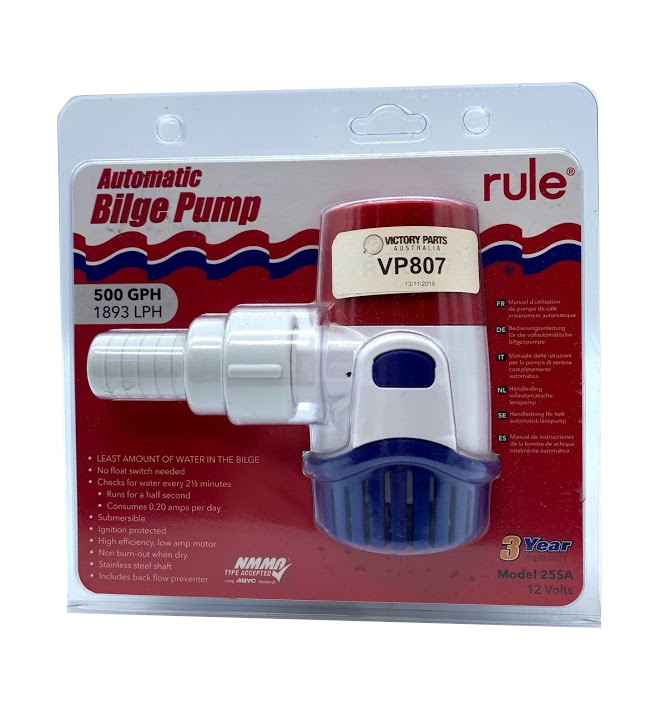
VP807

Original price was: $250.25.Current price is: $250.25.

VP22

Original price was: $89.43.Current price is: $89.43.

VP98

Original price was: $117.98.Current price is: $117.98.

J20-138

Original price was: $471.90.Current price is: $471.90.

J20-102

Original price was: $230.95.Current price is: $230.95.

J27-113

Original price was: $83.66.Current price is: $83.66.

VP53

Original price was: $151.58.Current price is: $151.58.

VP28

Original price was: $154.44.Current price is: $154.44.

VP27

Original price was: $188.05.Current price is: $188.05.

VP52

Original price was: $151.58.Current price is: $151.58.

VP5159

Original price was: $194.48.Current price is: $194.48.

VP5158

Original price was: $144.43.Current price is: $144.43.

J11-110

Original price was: $439.01.Current price is: $439.01.

VP4500

Original price was: $25.03.Current price is: $25.03.

VP4501

Original price was: $38.61.Current price is: $38.61.

VP1390

Original price was: $311.03.Current price is: $311.03.

VP1388

Original price was: $211.31.Current price is: $211.31.

What a Bilge Pump Actually Does

Water gets into every boat. Rain sits in the bilge between trips, spray comes over the gunwale in a chop, the odd wave finds its way in over the transom, and hull fittings and shaft seals weep small amounts all the time. A bilge pump sits at the lowest point of the hull and moves that water back over the side before it has a chance to build up.

Most of the time it is doing an unglamorous job, shifting a few litres after a wet night on the mooring. The reason it matters is the day it is not routine. Water in the bilge kills stability, adds weight low and moving, and once it reaches batteries or wiring you lose the electrics that run everything else. A working bilge pump is the difference between a wet floor and a much bigger problem, which is why a pump and its float switch are the cheapest insurance on the boat and the first thing worth testing at the start of a season.

Automatic or Standard: Which Bilge Pump Do You Need

A standard bilge pump runs only when you flick the switch at the helm. An automatic pump has a float or sensing switch built in, so it senses rising water and runs on its own whether you are aboard or not.

If the boat lives on a trailer under cover and you are always there when it is wet, a standard pump on a helm switch does the job. If it sits on a mooring, in a marina, or on a trailer in the open where rain collects, you want an automatic. Water arrives when nobody is watching, and a manual pump with nobody to flick the switch is no protection at all.

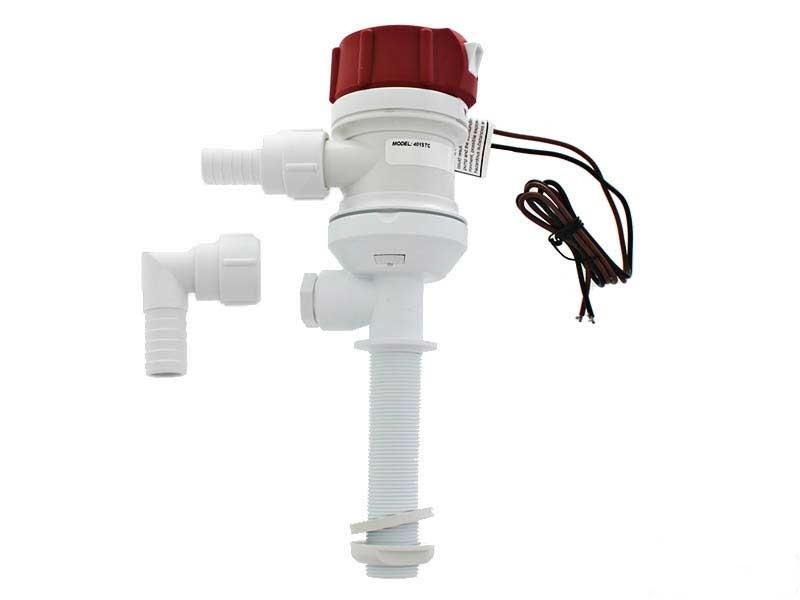
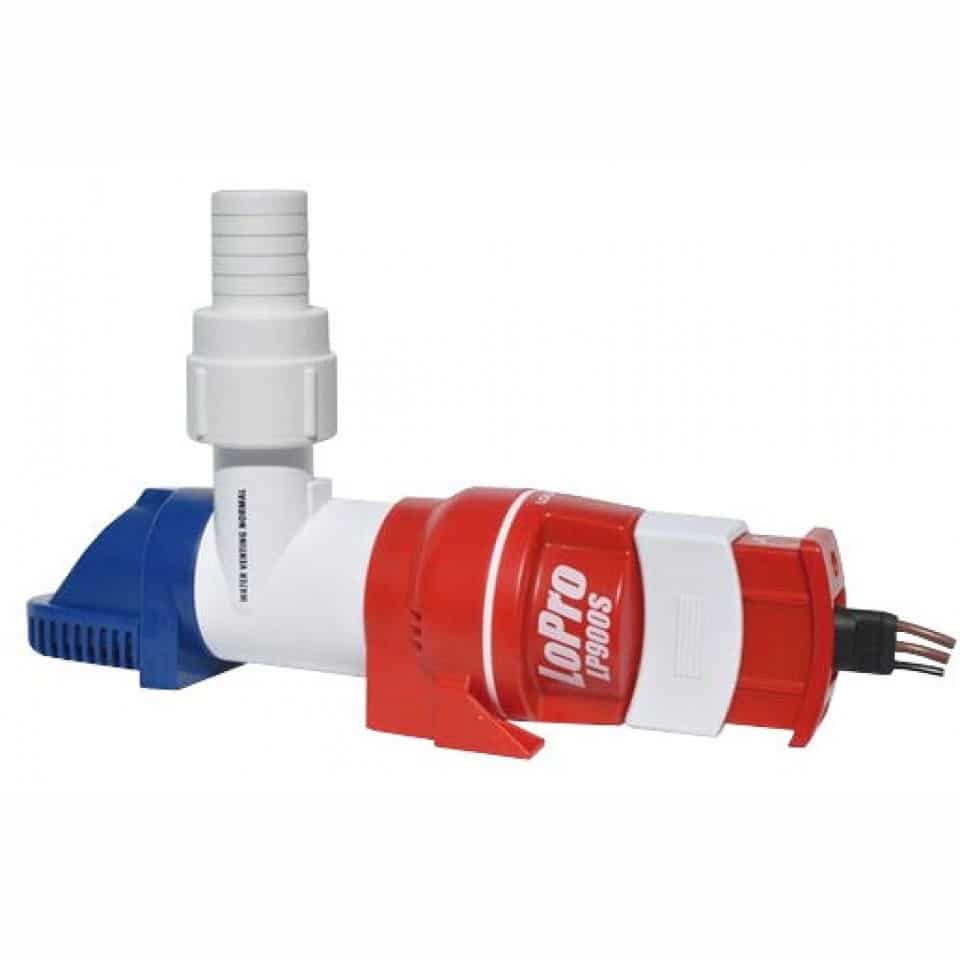
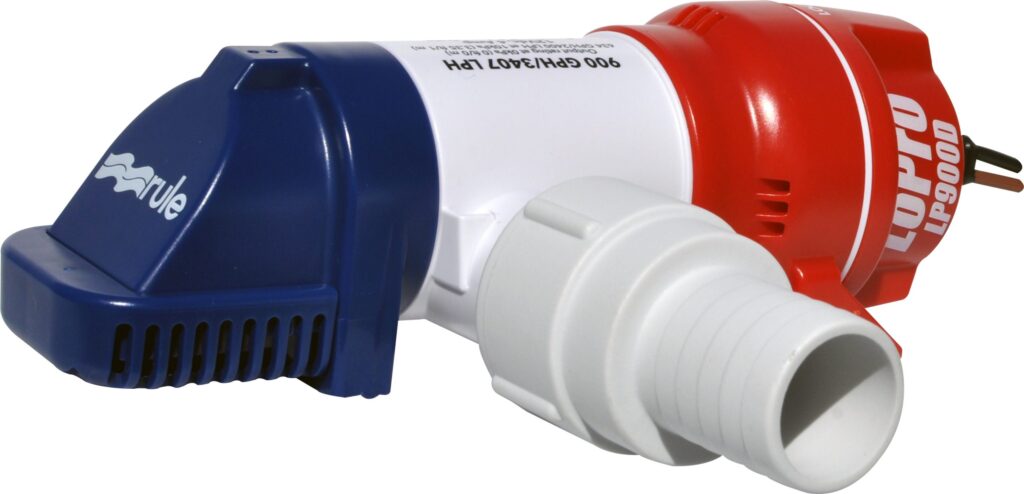
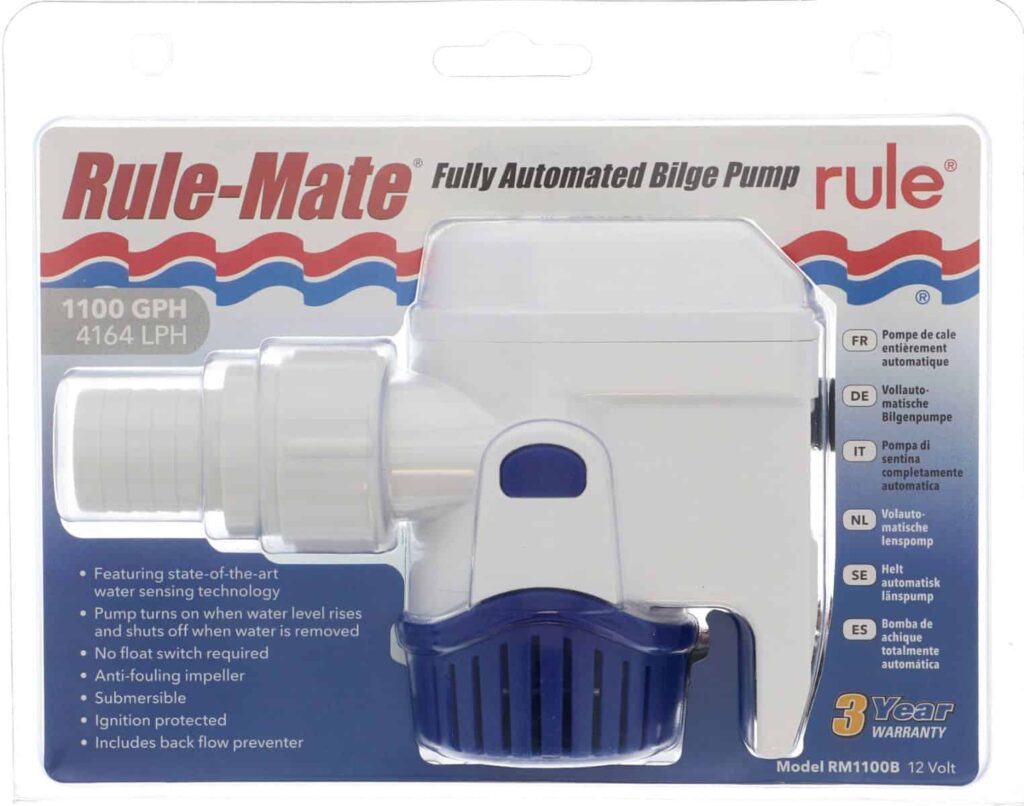
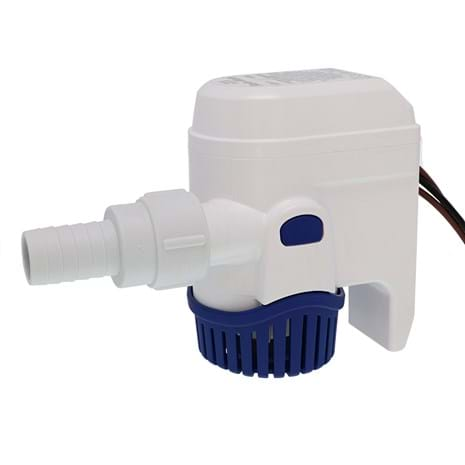
Victory Parts stocks both. The standard 12V pumps cover 360, 500, 800 and 1100, and the automatic range covers 500, 800 and 1100 along with the Rule-Mate auto pumps and the Lo-Pro auto in a low-profile housing for shallow bilges and under-floor spaces where a taller pump will not fit. The common setup on a boat that stays in the water is an automatic as the primary, mounted at the lowest point, with a second pump higher up as backup.

What the Number on a Bilge Pump Really Means

This is the part that catches most buyers out. The number in a bilge pump’s name is its rating in gallons per hour, and that figure is measured at open flow, with no hose attached and no height to lift the water. It is a laboratory number, not what the pump delivers on your boat.

In the real world the pump has to push water up out of the bilge, along a hose, and out through a skin fitting. Every metre of lift and every metre of hose costs you flow. A one metre lift alone can take roughly a third off the rated figure, and a longer run with bends takes more again. Plan on a pump delivering meaningfully less than the number on the box, and never size right to the limit.

Converting the ratings into litres helps, because Australian requirements are written in litres a minute rather than gallons per hour:

  • A 360 pump is roughly 23 litres a minute at open flow
  • A 500 pump is roughly 32 litres a minute
  • An 800 pump is roughly 50 litres a minute
  • A 1100 pump is roughly 69 litres a minute

Those are open-flow figures. Once the pump is fitted with hose and lift, expect real delivery to sit well below them.

Sizing a Bilge Pump for Your Boat

Requirements differ by state, so check the rules for the waters you boat in. As a worked example, Queensland’s safety equipment requirements call for bailing equipment appropriate to the vessel on ships under 5 metres, a pump or other bailing equipment with a minimum capacity of 45 litres a minute from 5 metres to under 8 metres, and 70 litres a minute at 8 metres and over.

Put that next to the conversions above and the picture is clear. A 500 pump at around 32 litres a minute at open flow does not reach the 45 litre minimum even before you account for hose and lift. An 800 pump clears it on paper but loses ground once installed. A 1100 pump sits just under the 70 litre mark at open flow, so on a larger boat you are looking at a bigger pump, or more than one, rather than a single unit sized to the bare minimum.

The practical rule is to size up. A pump that is larger than you think you need costs a little more and draws a little more current, and that is the whole downside. A pump that is too small is no help on the day it matters. On any boat with more than one enclosed compartment you need a pump in each, because water in a sealed forward compartment cannot reach a pump sitting in the stern.

Float Switches: Built In or Separate

You can buy a pump with automatic switching built in, or run a standard pump with a separate float switch wired alongside it. Both work, and the choice usually comes down to the bilge itself.

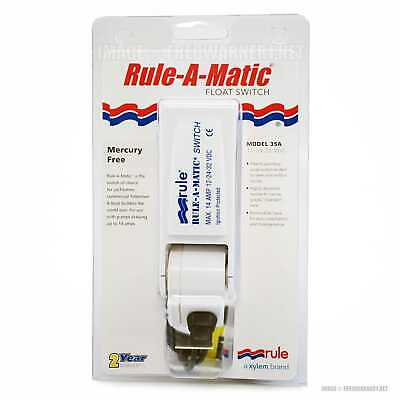
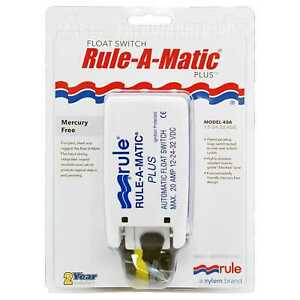
A separate float switch gives you control over where the switching happens. You can mount the switch at the true low point and the pump slightly higher, or set the switch so it does not chatter on and off every time the boat rocks at anchor. It is also the cheaper part to replace, because switches fail more often than pumps do, and swapping a switch is a far smaller job than pulling the whole pump.

An integrated automatic is simpler to fit, with one unit and one wiring run, and nothing loose to come adrift in a rolling bilge. Victory Parts stocks standard and heavy-duty float switches for separate installs, plus the Rule-Mate and Lo-Pro auto pumps for anyone who would rather fit one unit and be done. If your current pump is fine and only the switching has stopped working, fit a new switch rather than replacing the pump.

The Parts People Forget: Strainer, Plumbing Kit and Hose

A bilge pump is not a standalone purchase, and this is where most installs fall short. The pump is the part everyone buys and the rest is what determines whether it still works in two years.

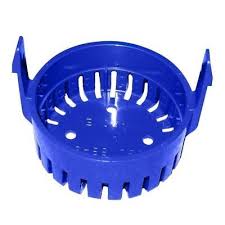
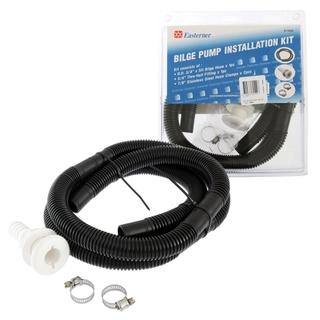
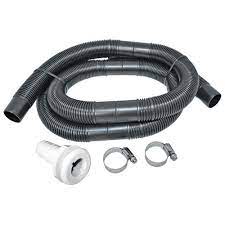
A base strainer keeps the debris that collects in every bilge, fuel hose offcuts, cable ties, leaves, fish scales and general grot, out of the impeller. Without one the pump eventually jams or runs dry against a blockage, and a jammed pump is a flat battery and no pumping. A plumbing kit gives you the correct outlet fitting and connection in 20mm or 28mm to match your hose, and matched sizing matters because a restriction at the outlet undoes the flow you paid for. Smooth-bore hose sized to the pump outlet, run with as few tight bends as you can manage, keeps friction losses down.

Buy the strainer, the plumbing kit and the hose at the same time as the pump. It is the same job, it is one delivery, and it is the difference between a pump that is rated at 1100 and an installation that actually moves water.

Washdown, Live Bait and Macerator Pumps

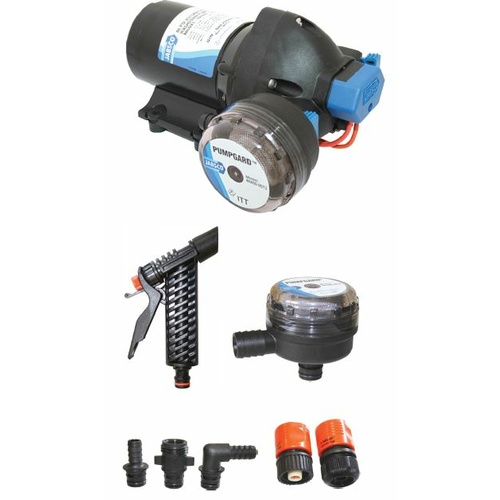
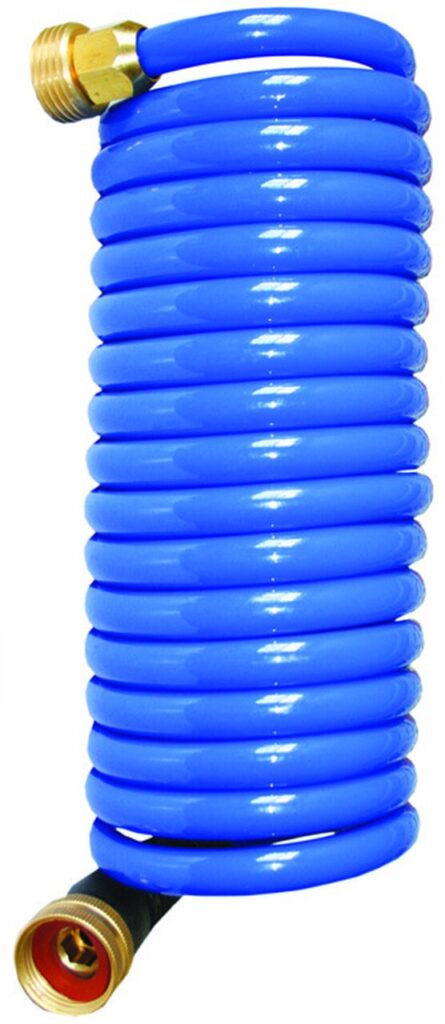
The same category covers the pumps that make a day on the water easier. Deckwash and washdown gear lets you hose salt, blood and scales off the deck before they dry, which is the single best thing you can do for the longevity of your boat’s surfaces and fittings. Victory Parts stocks a 12V deckwash kit rated to 60 PSI along with high-pressure washdown hose.

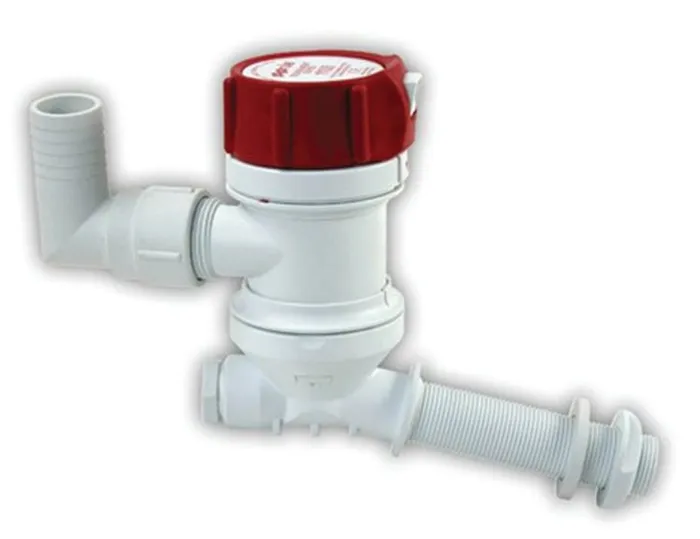
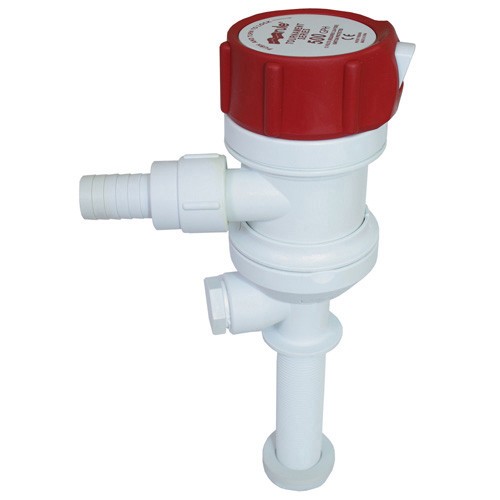
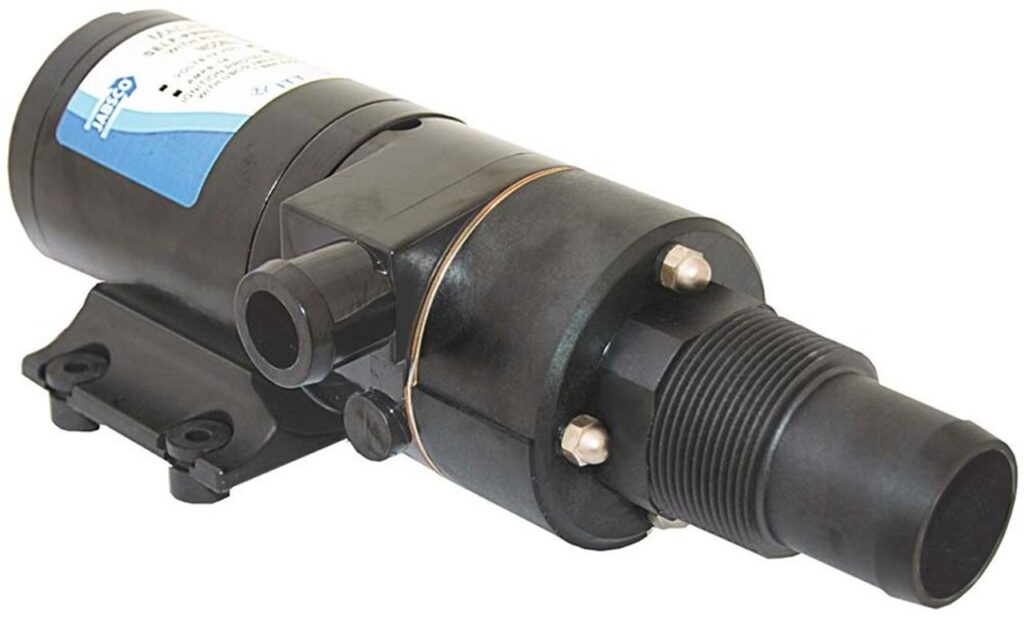
Live bait pumps keep bait alive in the tank by circulating fresh water through it, and are stocked in straight and angled outlet versions at 500 and 800 so you can match the plumbing you already have. Freshwater pumps supply the sink and shower on boats with a tank, and macerator pumps handle waste discharge. All of them are 12V and wire into the same system as your bilge pump, so if you are running new cable for one it is worth planning the others in at the same time.

Fitting and Maintaining Your Bilge Pump

Mount the pump at the lowest point of the bilge, where the water actually collects, and fix it down properly so it cannot move around in a seaway. Run the discharge hose up and out through a skin fitting sited above the waterline, with as smooth a run as the boat allows. Wire the pump on its own circuit with an appropriately rated fuse, use marine-grade cable, and keep every join up out of the bilge water and properly sealed. A connection sitting in salt water will corrode through and fail, usually without warning.

Maintenance is quick and worth doing at the start of every season and after any long lay-up:

  1. Lift the strainer and clear out whatever has collected in the bilge
  2. Tip a bucket of water into the bilge and confirm an automatic pump starts on its own
  3. Check the float switch moves freely and is not fouled by hose, cable or debris
  4. Inspect the discharge hose for kinks, chafe and soft spots, and check the skin fitting is clear
  5. Check the wiring and terminals for corrosion or green residue and reseal anything suspect
  6. Confirm the helm switch operates the pump manually as well as automatically

If a pump runs but moves little water, look at the strainer and the hose before you condemn the pump. A blockage or a collapsed hose is far more common than a failed motor.

Don’t take our word for it

Frequently Asked Questions

How do I know if my outboard carburettor needs cleaning or rebuilding?

Hard starting after the boat has sat, a rough idle, stalling at trolling speed, hesitation when you open the throttle, or fuel weeping from the carby all point to a dirty or worn carburettor. If fresh fuel and a new filter do not fix it, the carby needs a clean or a rebuild kit.

Rebuild it if the body is sound and the problem is gum, varnish or worn soft parts. Replace the whole carburettor if the casting is corroded or pitted, the threads are stripped, the mating face is warped, or the throttle shaft is worn loose. A rebuild kit fixes the majority of faults at a fraction of the cost.

A typical kit includes the gaskets, O-rings, needle and seat, float valve and the jets needed to return the carburettor to standard. Kits are matched to the engine, so order by make, model, year and horsepower.

Use a cleaner rated for use on the carburettor materials and follow the directions. Aggressive cleaners can attack rubber and plastic parts, so remove or replace the soft components before soaking the metal body, then fit the new soft parts from your rebuild kit.

Ethanol fuel goes off quickly. It oxidises within a couple of weeks and leaves gum that blocks the fine jets within about six. Use a marine fuel stabiliser, avoid leaving E10 in the tank between trips, and run the carby dry before longer storage.

No. A 2-stroke carburettor and a 4-stroke carburettor are built differently and the parts do not interchange. Always match the carburettor and rebuild kit to your exact engine type, make, model and horsepower.

A clean roughly every two years is good practice on any carburetted outboard, and sooner if you run E10, leave the boat sitting, or notice the early signs of rough running. Keeping clean fuel and a working fuel water separator upstream stretches that interval out.

Yes. Each carburettor on a multi-cylinder 2-stroke needs its own rebuild kit, and after rebuilding they should be synchronised so they open together for a smooth idle and clean throttle response.

Can’t find what you need?

With years of experience in the marine parts industry, our knowledgeable team is here to guide you through our product offerings, ensuring you find exactly what you need.

Your Cart (0)
Empty Cart Your Cart is Empty!

It looks like you haven't added any items to your cart yet.

Browse Products
Subtotal
Shipping & taxes calculated at checkout.
$0.00
Checkout Now