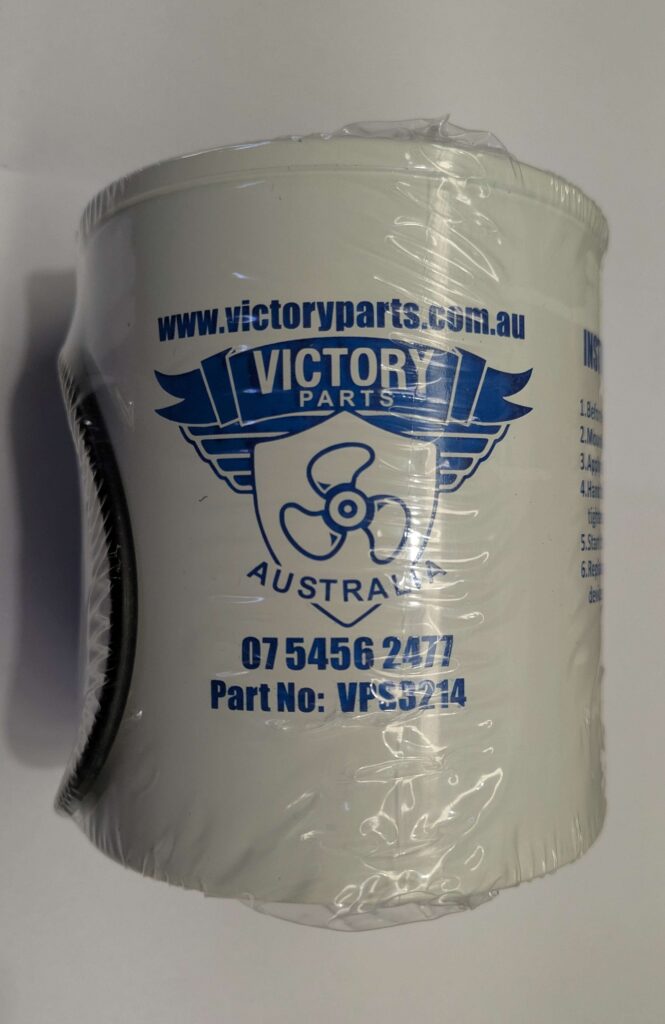
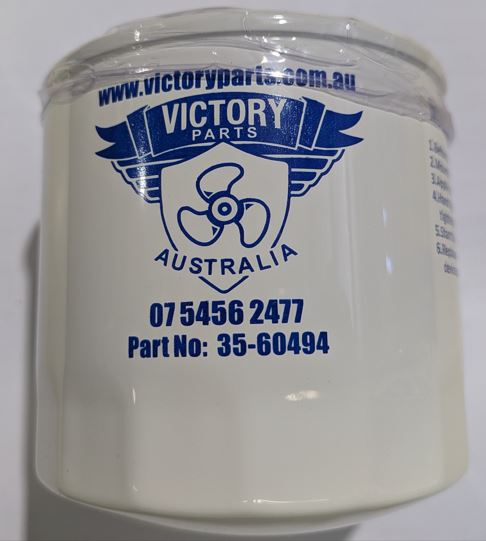
Why Every Boat Needs a Fuel Water Separator
Water in fuel is the number-one cause of outboard breakdowns in Australian waters, and it’s almost entirely preventable. Water gets into fuel four ways: condensation inside half-full tanks (especially common in our coastal humidity), phase separation when E10 ethanol fuel absorbs moisture, contaminated fuel from the bowser, and leaks through loose fuel caps or aged O-rings.
Once water reaches the engine it does real damage. Steel fuel lines and injector bodies corrode. Carburettor jets block with white aluminium oxide. Cylinders score when lubrication breaks down. At best you get hard starting and rough running; at worst you’re drifting offshore waiting on a tow.
The economics are simple. A replacement element costs $30 to $80. A new powerhead is anywhere from $2,500 to over $15,000 depending on the engine. A fuel water separator pays for itself the first time it does its job – and there’s a safety case beyond the dollars. A stalled engine in open water, a southerly change, or a tidal bar crossing is the kind of situation where a clean fuel system matters more than anything else on the boat.
How a Boat Fuel Water Separator Works
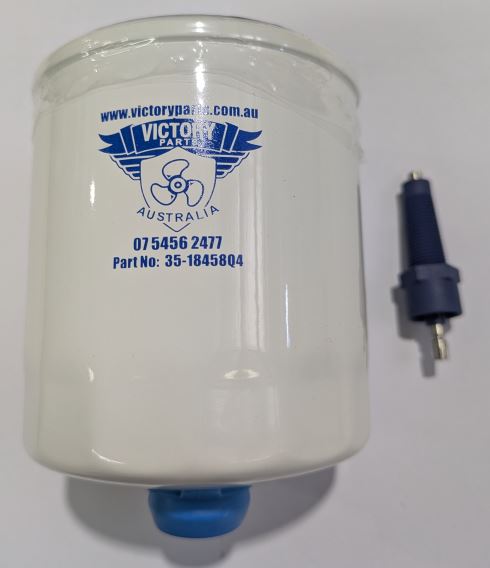
The unit is simpler than it looks. Fuel enters the canister from the tank side, and the chamber’s larger volume slows the flow right down. Water – being heavier than petrol or diesel – coalesces into droplets and drops into the collection bowl at the bottom. The fuel itself then passes up through a filter element (typically 10-micron for marine use) that traps debris, rust flakes, sediment and fuel varnish before sending clean fuel through to the fuel pump and engine.
Micron rating matters. Ten micron is the marine standard and the right choice for almost every outboard application. Two-micron elements offer finer filtration for direct-injection engines but flow less freely, so don’t downsize unless your engine manufacturer specifies it.
Choosing the Right Fuel Water Separator for Your Boat
The four things to match are engine, flow, fitment and bowl type.
Engine brand and horsepower. Yamaha, Mercury, Suzuki, Honda, Tohatsu and Evinrude all run standard thread sizes, so most aftermarket separators fit any brand – but the element you need is determined by the fuel demand of your engine. A 50hp four-stroke draws around 20 litres an hour at full noise; a 300hp V8 closer to 110. Undersize the separator and you’ll starve the engine at wide-open throttle.
Flow rating. Match the separator’s GPH (gallons per hour) rating to your engine’s peak fuel demand with a comfortable margin. For twin-engine setups, plumb a separator for each engine – never share.
Port thread size. Most marine separators use 1/4″ NPT or 3/8″ NPT ports. Check what’s on your existing bracket before ordering.
Clear bowl vs metal bowl. Clear polycarbonate bowls let you see water and contaminants at a glance, which is invaluable during pre-trip checks. Metal bowls are more impact-resistant. Some commercial and survey applications require metal – check your survey requirements first.
If you’re not sure which separator suits your setup, send us the engine make, model, year and HP and we’ll match it for you.
Signs Your Fuel Water Separator Needs Replacing
Most outboard “mystery faults” trace back to fuel. The symptoms to watch for:
- The engine cranks but won’t start, especially after sitting for a few weeks
- Power drops away at high RPM or the motor hesitates under load
- Rough idle, stalling at trolling speed, or the engine cuts out when you back off the throttle
- Visible water, brown sludge or rust in the collection bowl
- The filter element is dark brown, black, or visibly clogged when you pull it
- You’ve passed the service interval (see below)
If you’re seeing any of these, swap the element before doing anything else. It’s the first and cheapest thing to rule out.
How Often to Change a Boat Fuel Water Separator
The general rule is every 100 hours of running or once a year, whichever comes first. Bring that forward if you:
- Fish remote areas where you refuel from drums or jerry cans
- Run E10 ethanol fuel regularly
- Leave the boat sitting for long periods between trips
- Operate in tropical northern waters with high humidity
- Are heading out on a multi-day trip – replace before you go, not after
Keep a spare element on board. They cost almost nothing and a roadside swap (or rather, water-side swap) is a five-minute job with the right tools.
How to Install or Replace a Fuel Water Separator
Replacing a spin-on element is straightforward:
- Turn off the fuel supply at the tank and disconnect the battery
- Place a rag or container under the unit to catch fuel
- Unscrew the old element by hand, or use a band wrench if it’s seized
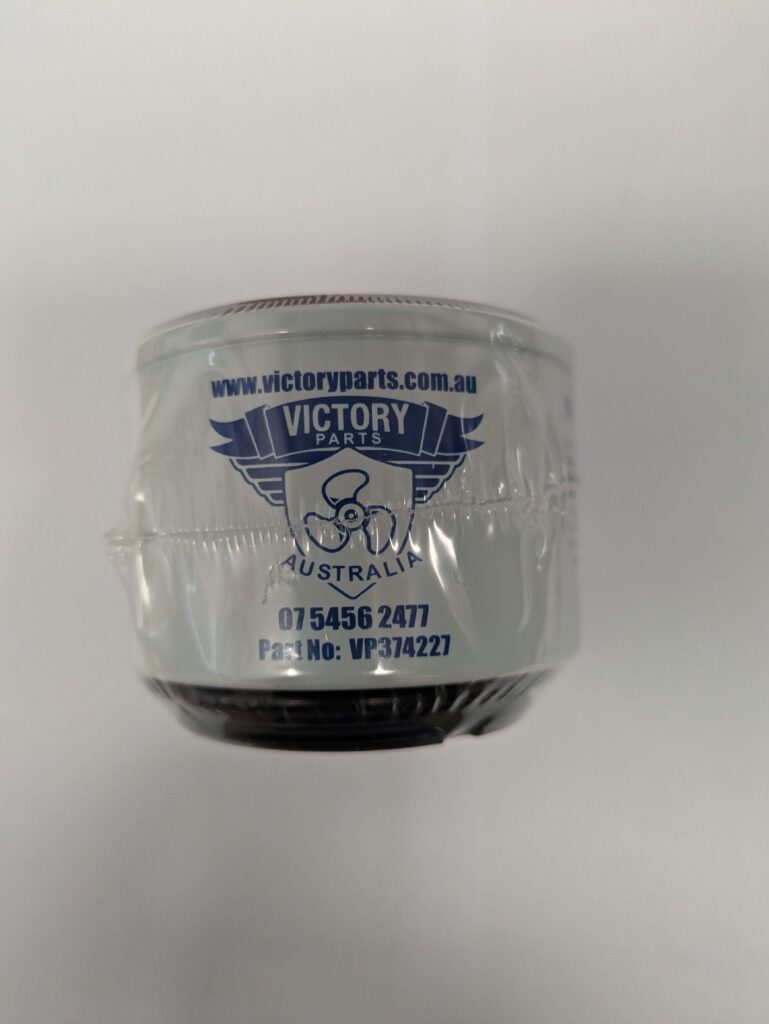
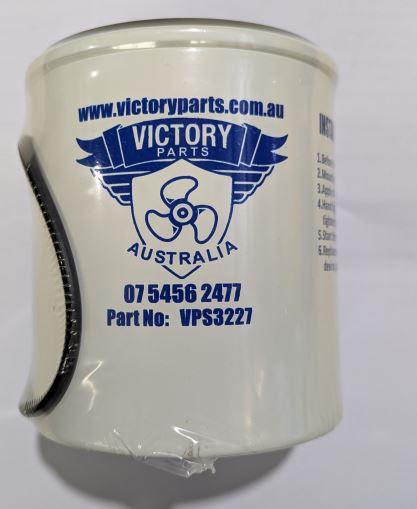
- Wipe the mounting head clean, then lightly oil the new element’s rubber gasket with clean fuel
- Thread the new element on by hand until the gasket touches, then turn another three-quarter turn
- Reconnect the battery, prime the system with the primer bulb until firm
- Start the engine and check the unit and fittings for leaks
- Dispose of the used filter responsibly – most marine workshops will take them
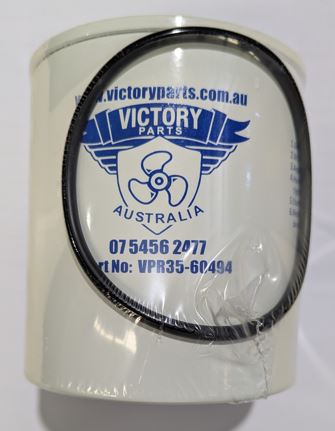
If your separator has a removable bowl, drain it at the same time and inspect the bowl O-ring for cracking. Replace if in any doubt – they’re cents to replace and a fuel leak in the engine well is a fire risk.
If you’re not confident with fuel system work, any authorised marine mechanic can do the swap in under fifteen minutes.
Frequently Asked Questions
How often should I change my boat fuel water separator? Every 100 hours of running or annually, whichever comes first. Change it more often if you run E10 ethanol fuel, refuel from drums, or store the boat for long periods. Always replace before extended trips offshore.
What micron rating do I need for an outboard fuel water separator? Ten micron is the marine standard and suits almost every outboard. Two-micron elements offer finer filtration but flow less freely – only use them if your engine manufacturer specifies it.
Can I run my outboard without a fuel water separator? You can, but you shouldn’t. Most outboards have a small inline filter that’s designed to catch debris, not separate water. Without a dedicated separator, any water in your fuel goes straight to the injectors or carburettor. It’s the cheapest insurance you’ll buy for your engine.
Will any fuel water separator fit my outboard? Most aftermarket separators use standard 1/4″ or 3/8″ NPT threads, so they’re cross-compatible across Yamaha, Mercury, Suzuki, Honda, Tohatsu and Evinrude outboards. What you need to match is the flow rating to your engine’s fuel demand and the element to the correct micron rating.
Do I need a fuel water separator if my outboard already has an inline filter? Yes. The inline filter on the engine is designed for fine particle filtration only, not water separation. A dedicated boat fuel and water separator removes water before it ever gets near the engine – they do different jobs and you need both.
How do I know if there’s water in my fuel filter? If your separator has a clear bowl, you’ll see water as a separate layer at the bottom (water is heavier than fuel and won’t mix). On a metal-bowl unit, open the drain valve and let a small amount run into a clear container – any water will sit below the fuel.
Can E10 ethanol fuel damage my outboard? Ethanol absorbs moisture from the air, and once it reaches saturation point it separates from the petrol – leaving a layer of water and ethanol at the bottom of the tank that gets drawn into the engine first. This is called phase separation and it’s the main reason a fuel water separator is essential on any boat running E10. Avoid E10 where possible, and never leave E10 sitting in a tank for more than a few weeks.
Are aftermarket fuel water separators as good as OEM? The major aftermarket brands meet or exceed OEM specifications, and most OEM separators are made by the same handful of filtration manufacturers under different labels. Match the flow rating and micron rating to your engine and you’re getting the same protection at a fraction of the price.