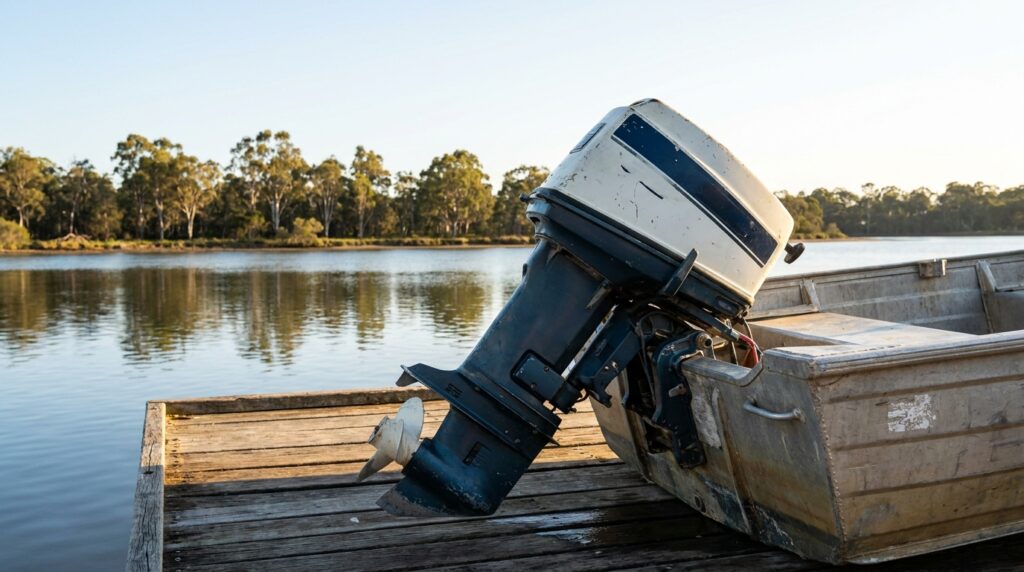
Choosing the best outboard motor for saltwater is one of the more expensive decisions in boat ownership. The motor outlasts most of the boat around it, costs more to replace than almost any other component, and lives in the most corrosive environment on the planet. Get the choice wrong and you are paying for it for the next fifteen years.
This guide is independent. We are a parts supplier, not a dealer for any of the brands below. We do not earn a commission on a Mercury sale or a Yamaha sale. What we do see, every day, is which motors hold up over time, which parts wear out fastest, and which brands keep their aftermarket parts ecosystem alive long after the original warranty has expired. That perspective is missing from almost every other buying guide on the SERP, and it is the perspective that actually matters when you are committing to an engine for a decade or more.
Why Saltwater Is So Hard on Outboards
Saltwater is the most aggressive corrosive environment most consumer machinery ever sees. Chloride ions accelerate galvanic corrosion between dissimilar metals, salt crystals trap moisture against surfaces, and once it starts the corrosion is self-sustaining. An untreated engine that lives in salt has years, not decades.
The corrosion attacks in three places. First, external surfaces (paint failure, then aluminium pitting). Second, internal cooling passages (salt crystallises and restricts flow until overheating). Third, the electrical system (corroded connectors, failed sensors, cooked harnesses). A motor designed for saltwater addresses all three layers.
Around eighty-five per cent of Australians live within 50 kilometres of the coast, so the majority of Australian outboards see salt as their primary operating environment. That makes saltwater suitability the most important single factor in the buying decision for most Australian boaters.
The Major Outboard Brands in Australia
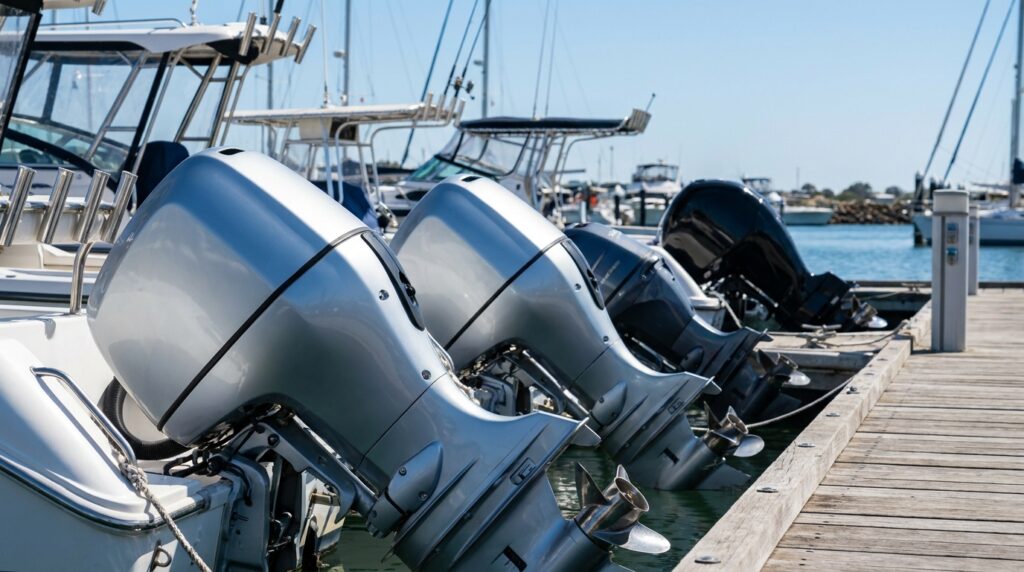
Five brands account for almost every saltwater outboard sold new in Australia: Yamaha, Mercury, Suzuki, Honda and Tohatsu. Each takes a slightly different approach to saltwater protection.
Yamaha
Yamaha holds the largest market share in Australia and the largest dealer service network. The four-stroke F series runs from the F2.5 portable up to the F450 XTO V8. Saltwater protection is built around the Phaze Five paint system (five sequential paint layers including a corrosion-inhibiting primer) and a stainless-steel propshaft on all but the smallest models. The lower unit uses a closed-loop water deflector design that minimises salt ingress.
Yamaha’s reputation in Australia is for reliability and resale value. A well-maintained Yamaha typically holds 50 to 60 per cent of its purchase price after 10 years, the highest residual of any brand. The flip side is that Yamahas are also the most expensive new motor in most horsepower brackets, and Yamaha dealers sometimes charge more for routine service than independents would. Yamaha parts are widely available aftermarket; browse our Yamaha parts range for the popular service items.
Mercury
Mercury Marine has the most engineered approach to saltwater corrosion of any brand. Its Advanced Paint System uses a four-stage process: Iridite chemical seal, electro-deposition primer, basecoat, and powder-coat finish. Internally, Mercury uses a patented low-copper aluminium alloy designed specifically for marine use, and integrates salt-shield flushing passages through the powerhead. Mercury also offers a three-year corrosion warranty on top of its three-year limited engine warranty, which is the most generous corrosion coverage on the market.
The Mercury FourStroke range covers small to mid-size (2.5 to 200 HP), the Verado range covers the supercharged 200 to 400 HP segment, and the SeaPro range is built for commercial and charter use. Mercury also has SmartCraft, the most advanced digital throttle and shift system available, and Adaptive Speed Control which automatically maintains RPM through swell. Browse our Mercury parts range.
Suzuki
Suzuki’s DF range is the value choice in saltwater four strokes. The DF2.5 up to DF350 V6 covers most of the recreational market with very competitive pricing relative to Yamaha and Mercury. Saltwater protection is built around a chromed-bore cylinder design (no cylinder liner to corrode), an aluminium alloy with very low copper content, and a polyester paint system that has proven durable in Australian conditions. The lean-burn fuel system on DF200 and up delivers excellent fuel economy at cruise.
Suzuki has an excellent reputation among offshore fishermen for reliability, particularly the DF150 and DF200 which are favourites on trailerboats from 5 to 7 metres. The dealer network is smaller than Yamaha but well-distributed in coastal Australia. Suzuki parts aftermarket coverage is good but slightly thinner than Yamaha or Mercury. See our Suzuki parts range and our companion guide on Suzuki serial number lookup for ordering the right parts.
Honda
Honda BF series outboards bring Honda automotive engineering to the marine market. The corrosion protection system uses Honda’s Tough Coat paint, a double-sealed wire harness, and double anode protection on the lower unit. Honda has a long reputation for reliability and quiet operation, and the BF20 to BF100 range is widely used on tinnies and small runabouts.
Honda’s weakness in Australia is dealer network coverage and the size of the parts ecosystem. Outside major coastal cities, finding a Honda Marine dealer can be a drive, and the aftermarket parts catalogue is thinner than the big three. Honda is best suited to owners who do their own maintenance and live within reach of one of the major dealer cities. Browse Honda parts.
Tohatsu
Tohatsu makes the most overlooked outboards on the Australian market. The 2.5 to 250 horsepower range competes mostly in the portable and mid-range segments, and the brand is the OEM behind several other-branded motors (older Mercury 4 to 30 HP, for example, are rebadged Tohatsu). Tohatsu’s saltwater protection is solid for the price point, and they are the value choice for small auxiliary motors and tender outboards.
Tohatsu is not the choice for a serious offshore primary motor, but for a small portable or a tinnie auxiliary, the value is hard to beat. Browse the Tohatsu parts range.
What Makes an Outboard Suitable for Saltwater
Corrosion-Resistant Construction
All five major brands now use marine-specific aluminium alloys with low copper content. The grade and the manufacturing process varies, but the principle is the same: copper accelerates galvanic corrosion when it contacts saltwater, so marine-grade alloys minimise copper content. Stainless steel components (propshaft, propeller, fasteners) resist corrosion completely.
Multi-layer paint systems are now standard across the premium brands. Mercury’s Iridite-then-primer-then-powdercoat is the most thorough, Yamaha’s Phaze Five is comparable, Suzuki and Honda use slightly thinner systems but still effective. The key is that paint failure exposes alloy to salt, and once the paint goes the corrosion accelerates.
Internal Saltwater Protection
Internal cooling passages and water jackets are the place corrosion bites hardest. Salt crystallises in the warm engine block as it dries out between trips, and over years the deposits restrict coolant flow. Mercury’s salt-shield flush passages and Yamaha’s freshwater flush ports are both designed to minimise this build-up.
None of these systems remove the need to manually flush the engine after saltwater use. They simply reduce the consequence of doing it imperfectly. There is no outboard on the market that does not benefit from a freshwater flush after a salt trip.
Electrical System Sealing
Modern outboards are computer-controlled engines. The harness, sensors and connectors are exposed to humidity and occasional water ingress. Salt accelerates copper corrosion inside electrical connections, which causes intermittent faults that are difficult to diagnose. Premium brands seal their connectors against moisture; budget brands do not.
Honda’s double-sealed harness, Yamaha’s gel-filled connectors and Mercury’s environmentally-sealed plugs are all examples of brands engineering against electrical corrosion. Check the connector quality when comparing motors.
Anode System
Every saltwater outboard needs sacrificial anodes on the lower unit. Some brands also fit anodes inside the powerhead (Mercury Verado is one example). More anodes generally means better protection, but the anodes themselves are consumable and need replacement when 50 per cent worn. Browse our marine anodes range.
The Factor Most Buying Guides Miss: Parts and Service Support
Most outboard buying guides focus on the new motor purchase. The reality is that a saltwater outboard runs for 10 to 20 years, during which time you will spend more on service parts and labour than the engine cost when new. The brand you choose decides which parts ecosystem you are locked into for the next two decades.
Yamaha and Mercury have the largest aftermarket parts ecosystems in Australia. Almost every service item (impellers, anodes, filters, gaskets, water pump kits) is available from multiple aftermarket suppliers at competitive prices. Suzuki is strong but slightly thinner. Honda and Tohatsu have smaller aftermarket catalogues, meaning you pay more for parts and wait longer to source uncommon items.
The other dimension is dealer service coverage. Yamaha has the most dealer service points in regional Australia. Mercury is a close second. Suzuki has good major-centre coverage but thinner in remote areas. Honda is concentrated in capital cities. Tohatsu has the thinnest dealer service network. If you cruise the coast or run a boat outside major centres, dealer coverage matters.
The Best Outboard for Your Use Case
Offshore Trailerboat (5 to 7 metres)
For a single-engine offshore trailerboat fishing or cruising, the standout pick is the Suzuki DF150 or DF200, or the Yamaha F150 or F175. Suzuki wins on price-to-performance and fuel economy. Yamaha wins on resale value and dealer network. Both run for fifteen years in salt with proper maintenance. Mercury 150 FourStroke is a comparable third option.
Centre Console Serious Offshore (7 metres plus)
For larger centre consoles running 250 to 350 horsepower, the Mercury Verado 300 and the Yamaha F300 are the dominant choices. Both are smooth, fuel efficient, and very reliable. Mercury’s SmartCraft and Adaptive Speed Control give it a slight edge for serious offshore work. Suzuki DF300 is a competitive alternative at lower cost.
Aluminium Tinnie or Estuary Boat
For 4 to 5 metre tinnies running 25 to 90 horsepower in estuary or sheltered saltwater, Yamaha F60 to F90 is the safe pick (legendary reliability, easy to service). Mercury FourStroke 60 to 90 is a strong second. Honda BF50 to BF90 is excellent if you can reach a Honda dealer. Suzuki DF60 to DF90 is the value choice.
Tender or Small Auxiliary
For small portable motors (2 to 15 horsepower) Tohatsu is the value pick, Honda is the reliability pick, and Yamaha is the resale-value pick. All four (including Mercury) are perfectly suitable for occasional salt use, but make sure to flush after every trip because portables have minimal internal corrosion protection.
Commercial and Charter Use
For commercial fishing, charter or oyster farming use, Mercury SeaPro and Suzuki commercial versions are the standout choices. Both are built for high duty cycles, have larger gearcases, and have the parts logistics to support 2000+ hours per year operation. Yamaha is a strong third option.
Side-by-Side Brand Comparison
| Factor | Yamaha | Mercury | Suzuki | Honda | Tohatsu |
|---|---|---|---|---|---|
| Corrosion protection | Phaze Five paint | Iridite + EDP + powdercoat | Chromed bore alloy | Tough Coat + double seal | Standard |
| Corrosion warranty | Standard 3 yr | 3 yr (separate) | 3 yr (limited) | 3 yr | 3 yr |
| AU dealer network | Largest | Second largest | Strong coastal | Capital cities | Thinnest |
| Aftermarket parts | Excellent | Excellent | Strong | Moderate | Moderate |
| Reliability reputation | Excellent | Very good | Very good | Excellent | Good |
| 10 yr resale | Highest | Good | Good | Moderate | Lowest |
| Price (new) | Premium | Premium | Mid | Mid | Value |
Maintenance Will Decide Whether Your Choice Lasts
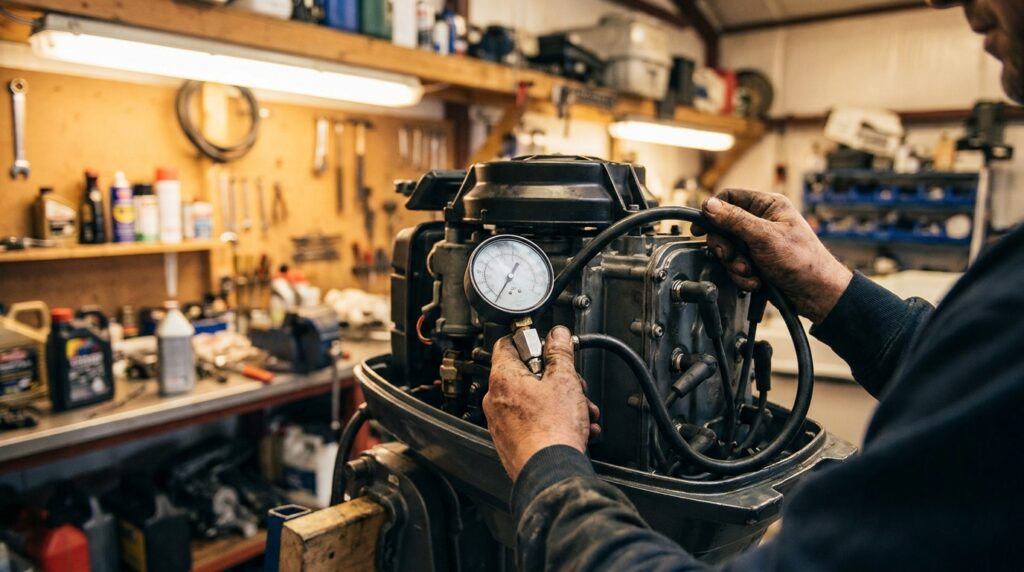
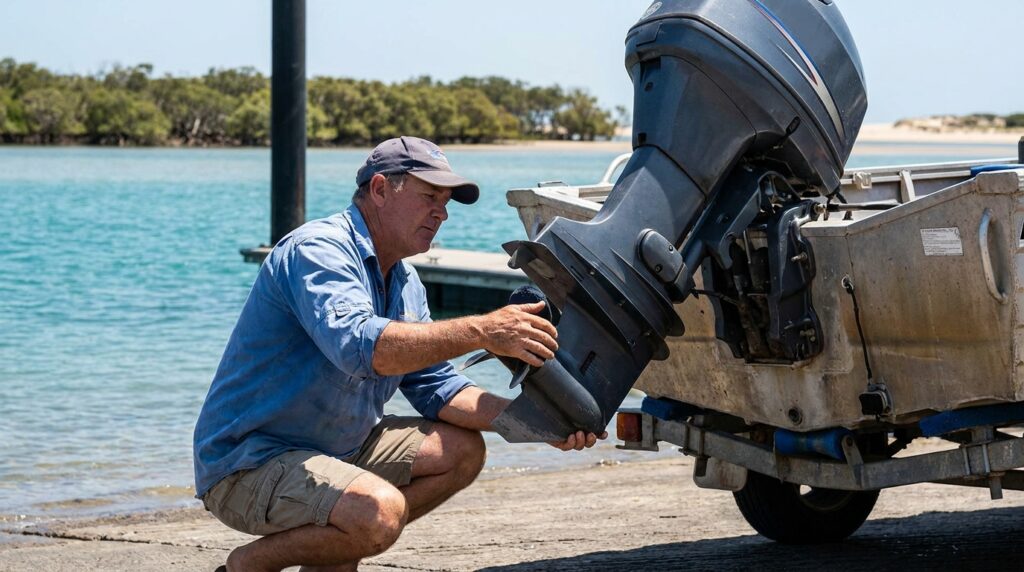
The most corrosion-resistant outboard in the world will still die in salt if it is not maintained. The maintenance routine is the same across all brands: flush after every saltwater use, change the oil and filter annually, replace the water pump impeller annually, inspect and replace anodes when half worn, check spark plugs and fuel filters.
Owners who do this religiously get 15 to 20 years from a modern four stroke. Owners who do not get five to eight. The brand choice matters less than the routine. Read our companion guide on outboard maintenance tips for the full schedule and the parts to keep on hand.
Best Outboard Motor for Saltwater FAQs
Which outboard brand is best for saltwater?
There is no single ‘best’ across every use case. Yamaha has the largest dealer network and best resale value in Australia. Mercury has the most engineered corrosion protection. Suzuki offers the best value with strong reliability. Honda is excellent for owners near a Honda dealer. The right brand depends on your use case, budget and access to service.
Are four strokes better than two strokes for saltwater?
Yes, for almost all recreational saltwater use. Modern four strokes are more fuel efficient, quieter, cleaner-running, and the dominant configuration in current production. Two strokes are still available for portable, commercial and some emerging market applications, but the recreational market has moved to four stroke.
How long should a saltwater outboard last?
With proper maintenance (flush after every use, annual service, impeller and anode replacement) a modern four-stroke outboard should last 15 to 20 years of recreational use, or 5 to 8 years of heavy commercial use. Neglected outboards in salt can fail within 3 to 5 years.
Should I prioritise corrosion protection or fuel economy?
Corrosion protection. Fuel costs vary 10 to 20 per cent between brands at the same horsepower. Corrosion damage costs thousands. The most fuel-efficient motor in the world is no good if it has corroded itself to scrap by year seven.
Does buying genuine parts matter for saltwater outboards?
It depends on the part. For routine service items like impellers, filters, anodes and spark plugs, quality aftermarket is identical in spec to genuine and significantly cheaper. For specialist items like sensors, ECU components and proprietary electrical parts, genuine is sometimes the only option. Read our genuine vs aftermarket guide for the part-by-part breakdown.
Where can I buy parts for my saltwater outboard in Australia?
Victory Parts stocks aftermarket parts for every major outboard brand sold in Australia, with dispatch from the Sunshine Coast. Browse by brand or by part category. Trade customers can apply for an account for trade pricing and priority dispatch.
Outboard Parts for Every Saltwater Boater
Whichever outboard you run in salt, Victory Parts stocks the maintenance parts to keep it running. Shop the common service categories: impellers and water pump kits, anodes, outboard oils, fuel water separators, filters and spark plugs.
Shop by outboard brand: Yamaha, Mercury, Suzuki, Honda, Tohatsu, Mariner, Johnson and Mercruiser.
All parts ship Australia-wide from our Sunshine Coast warehouse, with next-day delivery available for local QLD customers. If you are unsure which part fits your specific outboard, send the brand, model and serial number to online@victoryparts.com.au and our team will match it for you. Marine workshops, dealers and mobile mechanics should apply for a trade account for trade pricing and priority dispatch.