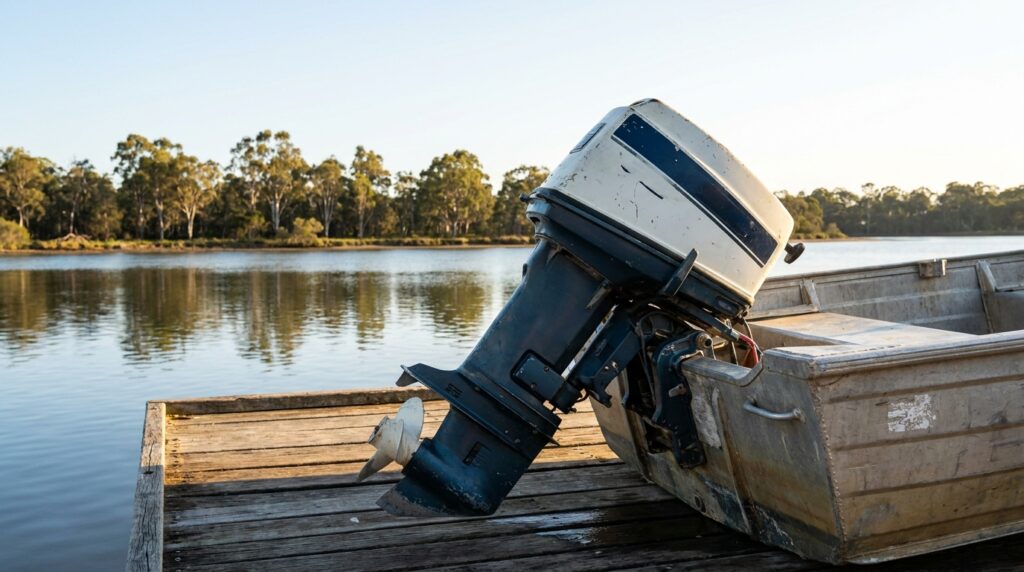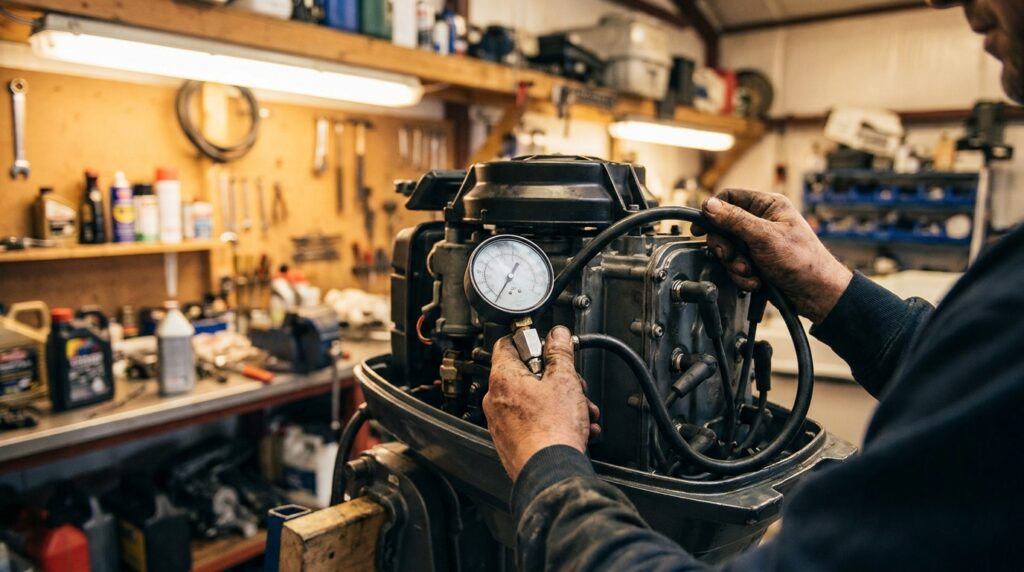
Boat maintenance is the difference between a long weekend on the water and an expensive afternoon waiting for a tow. Modern outboards and inboards are reliable engines, but they live a hard life. They run at sustained high RPM, sit in salt or brackish water, bake under Australian UV, and then get put away for weeks at a time. Without a maintenance routine, the small failures (a tired impeller, a corroded anode, an old fuel filter) cascade into the big ones (an overheated powerhead, a flooded gearcase, a stripped lower unit).
This guide is written for Australian conditions specifically. Most of the boat maintenance content online is American, and it does not account for the realities of Top End humidity, Queensland saltwater, or the eight-week off-season most southern boats sit through. Use this as your annual reference and your pre-season checklist.
Pre-Trip Checks: Five Minutes That Stop Most Breakdowns
Marine technicians will tell you that the vast majority of breakdowns they see are not catastrophic failures. They are small problems that built up over time and could have been caught in a five-minute pre-trip walk-around. Get into the habit of doing this every time the boat leaves the ramp.
Pull the dipstick on a four-stroke and check the oil level and condition. Clean amber oil is healthy. Milky or foamy oil means water in the crankcase, which is a stop-everything situation. Dark gritty oil means you are overdue for a change. Top up if you are slightly low, but never run a motor with the oil over the full mark, which on most outboards means oil getting into the air intake.
Check the battery terminals are tight by grabbing the cables near the post and wiggling. Loose terminals are the single most common reason an engine will not start on the ramp. A smear of dielectric grease on the terminals stops the corrosion that loosens them in the first place. If the boat sits for more than a week between trips, fit a smart battery maintenance charger or a small solar trickle charger to keep the battery topped up.
Pop the cowling and look at the powerhead. A quick visual is enough to catch fuel leaks, weeping seals, loose wiring or rodent damage. A tablespoon of fuel on top of the powerhead from a perished primer bulb is a fire risk, not an inconvenience.
Confirm fuel level and how old the fuel is. Modern Australian petrol with ten per cent ethanol (E10) begins to oxidise in as little as a fortnight. Anything older than a month should be dosed with marine fuel stabiliser before you head out, or drained and replaced if you can smell the varnish in the tank.
Australian fuel note: Never put E15 or E85 in a boat. The plastics and rubbers in marine fuel systems are not rated for those ethanol blends, and the lean condition E15 creates will cook an older two-stroke. Stick to 91, 95 or 98 octane with no more than ten per cent ethanol, and use a marine fuel stabiliser in every tank.
Engine and Fuel System Maintenance
Annual Oil and Filter Change
Every four-stroke outboard, sterndrive and inboard needs an oil and filter change once a year or every 100 hours of running, whichever comes first. The annual rule matters as much as the hours one. Oil degrades through exposure to moisture and combustion byproducts even when the engine is not running. A weekend boat that does forty hours a year still wants a fresh service every twelve months.
Bring the interval forward if you do a lot of low-RPM trolling (which thins the oil with unburned fuel), if you run in saltwater year-round, or if you store the boat with old oil in it. Change the oil before storage, not after.
Use marine-grade oil only. NMMA FC-W certified four stroke oil is what the engine manual asks for, and there is no safe substitute. Automotive oil foams under marine load, lacks the anti-corrosion package, and will get diluted faster. Shop our outboard engine oil range for the right grade for your motor.
Fuel Filters and Water Separators
The fuel filter is the cheapest insurance policy on the boat. A spin-on element costs less than fifty dollars and replaces in five minutes. A failed injector or carburettor caused by dirty fuel is a multi-thousand dollar repair. Change the fuel filter every annual service, and any time you have lifted the cowling and noticed fuel cloudiness in the bowl of a fuel water separator.
The fuel/water separator is a second-stage filter that catches water before it reaches the injectors. Inspect the clear bowl at every fuel-up. If you can see water sitting at the bottom (a clear layer below the petrol), drain it through the bottom plug before you start the engine. Replace the entire separator element annually.
Water Pump Impeller
The water pump impeller is the single most overlooked service item on a boat, and the most consequential when it fails. The impeller is a small rubber wheel inside the lower unit that pumps cooling water from the gearcase up to the powerhead. It spends its working life flexing thousands of times a minute. After a season or two, the rubber loses its memory, the vanes fatigue, and pumping flow drops.
A failing impeller does not announce itself. The tell-tale stream coming out the back keeps spitting water, but volume drops. The engine runs slightly hotter, then the cylinder head heats up faster, and on the wrong day at the wrong RPM you cook the powerhead. Replace the impeller every twelve months as a rule. While you are in there, replace the wear plate, housing seals and gear case gaskets at the same time.
Spark Plugs and Belts
Spark plugs are an annual replacement on most four strokes. Even a plug that still fires has worn electrodes that misfire under load. New plugs cost less than a tank of fuel and they restore full combustion efficiency. Use only marine-rated plugs in the heat range specified for your engine; automotive plugs will run too hot and pre-ignite. Browse marine spark plugs for your engine.
Accessory belts on inboards, sterndrives and larger four stroke outboards need an annual inspection. Look for cracking, glazing or fraying along the inner ribs. Replace the belt if you can see any of those. A snapped belt at sea takes out the alternator and the water pump on most engines.
Battery and Electrical System
Marine batteries live a brutal life. They get cycled hard, vibrated constantly, and exposed to salt. A good marine starting battery should last four to five seasons. If yours is older than that, replace it before it leaves you stranded. Always use a marine battery, never an automotive one. The plates are thicker, the case is stronger, and the terminals are threaded for marine cable lugs.
Inspect the terminals every two months. Use a wire brush to clean any white powdery buildup, then re-tighten and coat with dielectric grease. Check the cables themselves for cracking in the insulation, which lets moisture into the copper and causes voltage drops you cannot see.
If the boat sits, fit a smart maintenance charger. They cost less than a hundred dollars and they will more than double battery life. For larger setups (dual battery, sterndrive or inboard installations) consider a multi-bank charger that handles starting and house batteries separately.
Carry a small lithium jump-pack as a backup. They are the size of a paperback book, hold their charge for months, and will spin a small outboard or revive a flat house battery on the water.
Hull, Anti-fouling and Corrosion Control
Anti-fouling for Australian Waters
Fibreglass hulls in salt or brackish water need anti-foul refreshed every twelve to twenty-four months depending on usage and water temperature. North Queensland and Northern Territory boats need it more often because warmer water grows fouling faster. Polish topsides at the same time, and check the gel coat for blisters or chips that need sealing before water finds the laminate.
Aluminium hulls need a different anti-foul (copper-based products will corrode aluminium catastrophically). Use a marine paint specifically rated for tinnies. Check with your local antifoul supplier for the right system.
Anodes: Critical for Australian Saltwater Boats
Sacrificial anodes are the most important corrosion protection on the boat. They are small zinc, aluminium or magnesium blocks bolted to the lower unit, trim tab, transom and engine block, designed to corrode preferentially so that the more expensive metal around them does not. Without working anodes, your gear case, water pump housing, trim ram and propeller all start dissolving.
Check anodes at every haul-out, or at least twice a year. Replace any anode that has worn down by fifty per cent or more. The metal you choose matters: aluminium anodes for saltwater and brackish water, magnesium anodes for freshwater (lakes and rivers). Zinc still works in saltwater but aluminium has largely replaced it because it provides slightly more protection and is more environmentally friendly. The wrong anode metal is worse than no anode at all in freshwater, so do not just buy what is cheapest.
In tropical Australian conditions (north QLD, NT, WA Kimberley region) anodes wear roughly twice as fast as in southern waters. Carry a spare set on the boat and check them after every long trip. Browse our marine anodes range, organised by engine brand.
Australian climate reality: Generic American boat maintenance schedules assume temperate conditions. In Cairns, Darwin or Broome, your anodes wear twice as fast, your antifouling has half the life, and your fuel oxidises faster because of the heat. Halve the recommended service intervals if you are running in the tropics year-round.
Propeller, Shaft and Steering
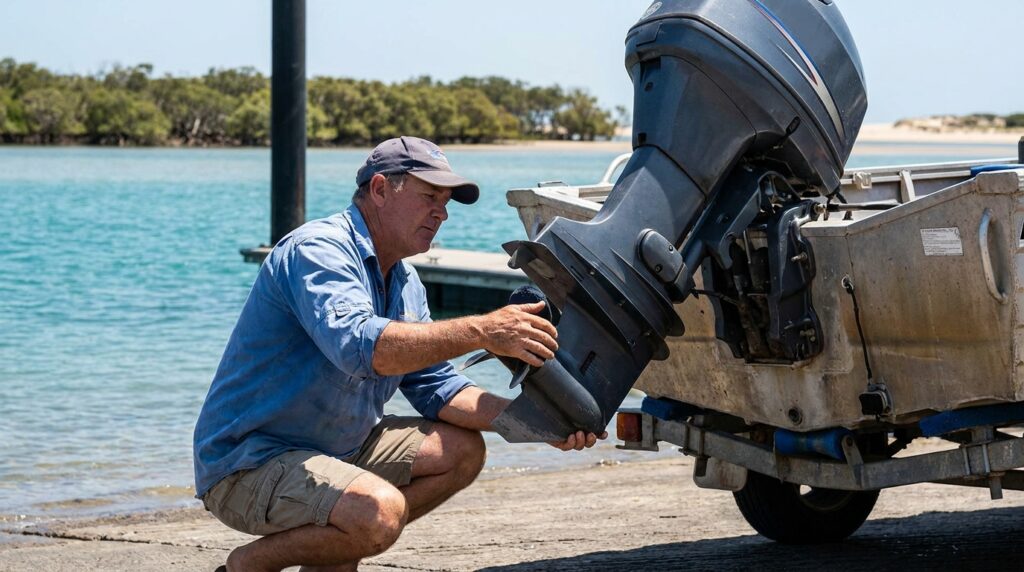
Pull the propeller a few times a season and check the shaft for fishing line. Lost or discarded fishing line floats on the surface and wraps around the prop hub on the way through. Over time it works into the gap between the hub and the gear case, eats through the prop shaft seal, and lets water into the gear case. Once water gets in, the gear oil turns milky brown and the gearcase is on borrowed time. Check the shaft seal whenever you have the prop off.
Inspect the propeller itself for nicks, bends, and the pink discolouration of dezincification (which means the alloy is breaking down). Even small dings affect performance and fuel economy. Most marine engineers can rework a damaged prop for less than the price of a new one.
Hydraulic steering systems lose a small amount of fluid over time. Check the reservoir level every three months and top up with the manufacturer-specified fluid. If the helm feels spongy, you have air in the system that needs bleeding. Look for leaks at the rams and hose fittings; weeping fluid is a sign of an O-ring on the way out. Browse our steering parts range for cables and components.
Seasonal Service: Pre-Season and Lay-Up
Pre-Season Recommissioning
Most southern Australian boats spend three to six months off the water through winter. Bringing the boat back into service in spring is about reversing the storage steps and double-checking everything that sat dormant.
Start with fluids: change the engine oil and filter, drain and refresh the gear oil, replace the fuel filter and water separator element, and inspect the coolant on closed-cooling inboards. Charge the batteries on a smart charger overnight and load-test them; a battery that holds twelve volts at rest but drops below ten under cranking load is finished. Inspect all the rubber components (impeller, hoses, primer bulb) because rubber takes the worst beating from heat cycles and sun exposure.
Check the trailer at the same time. Bearings, lights, tyres, winch and safety chains all want a quick walk-around before the first launch.
Winterising and Off-Season Storage
If the boat will sit for more than six weeks, do these four things before it goes to bed. First, fill the fuel tank to ninety-five per cent and add a double dose of marine fuel stabiliser. A full tank reduces the condensation that forms inside an empty tank as temperature changes through the day. Second, run the engine for ten minutes after adding stabiliser so the treated fuel reaches the carburettors or fuel rail. Third, fog the cylinders on two strokes and older four-strokes with a fogging oil aerosol to prevent rust. Fourth, disconnect the battery negative or switch off the master switch, and ideally connect a maintenance charger.
For inboards and sterndrives, drain the freshwater plumbing and flush the system with non-toxic marine antifreeze (the pink propylene glycol stuff used in caravan water systems). Frost is not a major risk in most of Australia, but freshwater systems still corrode and grow biofilm when they sit full.
Trailer Maintenance: The Forgotten Half of Boat Ownership
Trailer failures cause more boating weekend disasters than engine failures. A wheel bearing that lets go on the highway, a flat tyre at three in the afternoon, a snapped winch cable at the ramp; all of these are entirely preventable.
Hose the entire trailer down with fresh water after every launch in salt. Salt sits in every crevice and starts corroding straight away. Pay attention to the leaf springs, the U-bolts at each axle, the brake calipers if you have them, and the winch mechanism.
Pack the wheel bearings annually, more often if you launch in saltwater regularly. Bearing buddy caps (the spring-loaded hub seals) let you grease the bearings without pulling the wheels, and they double as a visual check; if grease is weeping out, the seal is gone and water can get in.
Check the trailer lights every trip. A connector full of corroded copper is the most common reason a trailer light circuit dies. Most modern boat trailers use submersible LED lights with sealed wiring, which is a big improvement on the older incandescent setups, but the connector at the tow vehicle is still a weak point. Carry a spare connector and a multimeter.
Tyres are the trailer item most people forget. Trailer tyres age out before they wear out. Check the date code stamped into the sidewall (a four-digit number in an oval; the first two digits are the week, the last two are the year). Tyres more than six years old should be replaced regardless of tread depth. UV destroys rubber faster than driving wears it.
Bilge, Safety and Compliance Gear
Test the bilge pump and float switch at every haul-out. Lift the float manually and listen for the pump cycling. A failed bilge pump on a sinking boat is the kind of failure you do not get to learn from twice. Replace pumps that hum but do not move water; the impellers wear out and the motor can keep running with no flow.
Australian boats are required to carry safety equipment that varies by state and area of operation. For NSW, the rules are at Transport for NSW Maritime. For Queensland, see Maritime Safety Queensland. For Victoria, see Better Boating Victoria. Common items include life jackets (one per person, age-appropriate), flares (in date), an EPIRB beyond a certain distance from shore, a fire extinguisher, an anchor and chain, a sound-signalling device, and a torch.
Inspect every item at least once a year. Flares have expiry dates (typically three years from manufacture). Fire extinguishers need their gauge checked. Life jackets need their buckles, straps and any inflation mechanisms inspected. CO and smoke alarms in cabin boats need new batteries before each season.
The Annual Boat Maintenance Schedule
Here is the consolidated schedule. Treat this as the baseline; halve the intervals for tropical northern Australian conditions or heavy commercial use.
| Frequency | Tasks |
|---|---|
| Every trip | Oil level, battery terminals, fuel level, visual hull and bilge check, safety gear quick-count, trailer light test |
| Monthly (if used regularly) | Anode wear check, battery state of charge, prop shaft fishing line check, bilge pump test |
| Every 50 to 100 hours | Fuel water separator drain and inspect, grease throttle and shift linkages, inspect belts and hoses |
| Annually or 100 hours | Engine oil and filter, gear oil, water pump impeller, spark plugs, fuel filter, anodes inspected and replaced as needed, trailer bearings repacked, antifouling refresh if due |
| Pre-season | Battery load test, full safety equipment audit, hull inspection, anode replacement, trailer service |
| End of season / before lay-up | Fuel stabiliser added, fog cylinders, drain freshwater plumbing, disconnect or float-charge batteries, full wash-down |
Maintenance Differences Between Outboard Brands
All four-stroke outboards share the same basic maintenance schedule, but each brand has quirks worth knowing. Yamaha four strokes are famously low-maintenance but have a known weakness in the lower-unit oil seal on some F50 to F90 models; check the gear oil for water at every service. Mercury four strokes use a slightly different service interval on their supercharged Verado range and need premium 25W-40 oil, not the 10W-30 most other outboards run. Suzuki four-stroke DF series motors have an excellent reputation but the lean-burn fuel system on DF200 and up benefits from cleaner fuel and more frequent fuel filter changes. Honda four strokes share the most parts in common with the automotive Honda lineup, but you still need to use marine-grade fluids, not automotive ones.
Tohatsu and Johnson/Evinrude two strokes (still common on smaller portable motors and older boats) follow a different schedule. Two-strokes do not have a scheduled oil change because the oil is consumed with the fuel. What matters is using a quality NMMA TC-W3 oil and keeping the injection reservoir topped up. Carburettor cleaning every two years prevents the gummy buildup that kills cold starting.
For all brands, parts are available aftermarket at Victory Parts at significantly lower cost than the equivalent genuine part, in OEM specification. Read our companion guide on genuine vs aftermarket outboard parts for a full breakdown of where aftermarket is the smart choice and where to stick with genuine.
When DIY Maintenance Is Not Enough
Routine maintenance is well within reach of any boat owner with basic tools and a workshop manual. Oil changes, impeller swaps, anode replacement, filter changes, plug changes and trailer servicing are all owner-level jobs. Most can be done at the boat ramp or on the driveway.
Some jobs are not. Anything inside the powerhead (timing belts, valve adjustments, cylinder head work) belongs at a qualified marine mechanic. Anything involving the gearcase teardown is also workshop territory because the special tools and seals required cost more than the job. Hydraulic steering bleed jobs and electronic engine diagnostics generally need workshop kit too.
Find a marine mechanic before you need one, not after. Trade marinas, dealer workshops, and independent mobile mechanics all operate across Australia. A good mechanic who knows your boat is worth ten times what they charge.
Boat Maintenance FAQs
How often should I service my outboard?
Once a year or every 100 hours of running, whichever comes first. The annual rule matters because oil and rubber components degrade over time even when the engine is not running. Bring the interval forward if you boat in tropical Australian conditions, run a lot of low-RPM trolling, or store the boat in saltwater.
Can I service my own outboard or does it void the warranty?
In Australia, under the Australian Consumer Law and the ACCC’s motor vehicle and motorcycle industry guidance, warranty cannot be voided just because you service the engine yourself or use aftermarket parts, provided the work is done correctly and the parts meet the relevant specifications. The exception is workshop-only items (like timing belt replacement) which usually require dealer servicing within the warranty period. Always keep records of any work you do, including parts receipts.
What is the most important boat maintenance task?
Three jobs together prevent the majority of breakdowns: an annual oil and filter change, an annual water pump impeller replacement, and regular anode inspection. Skip any one of those and you eventually pay for it. Do all three on schedule and modern outboards are extraordinarily reliable.
How do I store a boat for winter in Australia?
Fill the fuel tank, add stabiliser, run the engine to circulate, fog the cylinders, disconnect or float-charge the battery, drain any freshwater plumbing, and wash the boat down. Most of Australia does not need a full winterise like cold climates do, but the boat will sit for weeks at a time and the rubber, fuel and battery still need preparing.
Should I use genuine or aftermarket parts for boat maintenance?
It depends on the part. For routine service items (impellers, filters, anodes, spark plugs, gaskets, fuel pumps) quality aftermarket is identical in specification to genuine and significantly cheaper. For specialist items (ECU, sensors, certain ignition components) genuine is sometimes the only practical option.
How much does annual boat maintenance cost?
A DIY annual service on a single outboard (oil, filter, plugs, fuel filter, impeller, anodes) typically runs $200 to $400 in parts depending on the engine size. Workshop labour adds another $300 to $600 if you do not do it yourself. Larger engines, twin installations and inboards cost more. Trailer servicing adds another $100 to $200 in parts annually.
What boat maintenance can I do at the ramp?
Visual checks, oil level checks, battery terminal cleaning, fuel water separator drain, anode visual inspection, prop fishing line check, and post-trip freshwater flush. Keep a small toolbox in the boat with the right sized prop wrench, a pair of pliers, electrical tape, spare fuses, and a multimeter. That kit covers most ramp-side problems.
Maintenance Parts for Every Outboard, Australia-Wide
Victory Parts stocks aftermarket service parts for every major outboard brand sold in Australia: Yamaha, Mercury, Suzuki, Honda, Tohatsu, Johnson, Evinrude, Mariner, Chrysler and Mercruiser. Shop by brand or jump straight to the part category you need.
Common service items: water pump impellers, anodes, fuel water separators, oil filters, spark plugs, outboard oils and gaskets.All parts ship Australia-wide from our Sunshine Coast warehouse, with next-day delivery available for local QLD customers. Marine workshops, dealers and mobile mechanics can apply for a trade account for member pricing and priority dispatch. If you are unsure which part fits your specific motor, send your engine make, model and serial number to online@victoryparts.com.au and our team will match it for you.