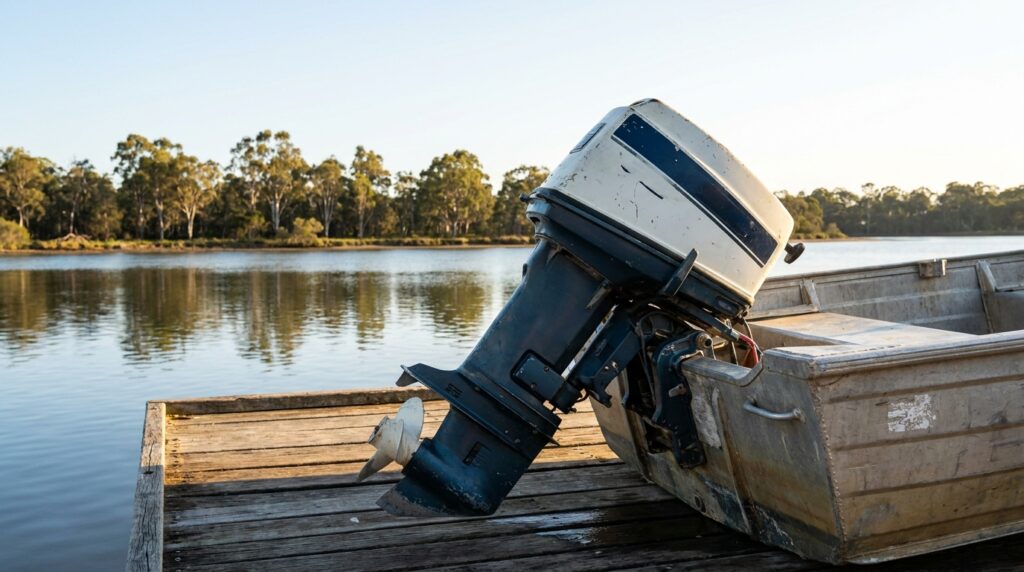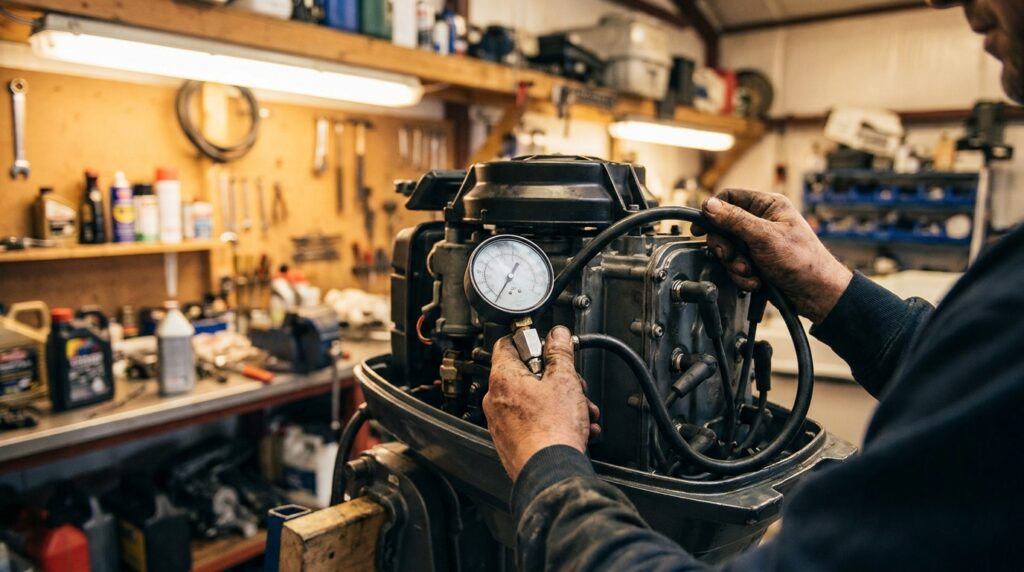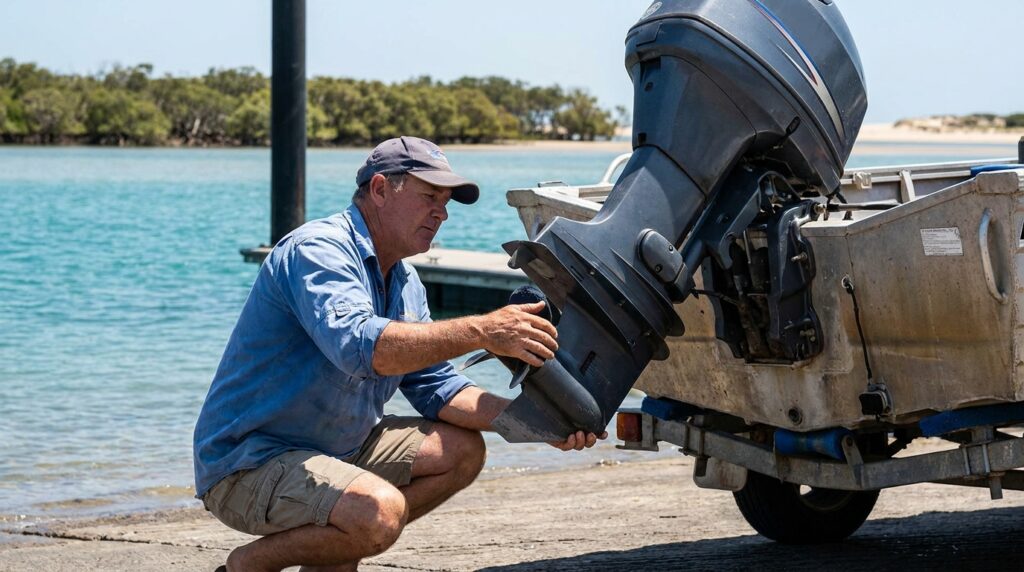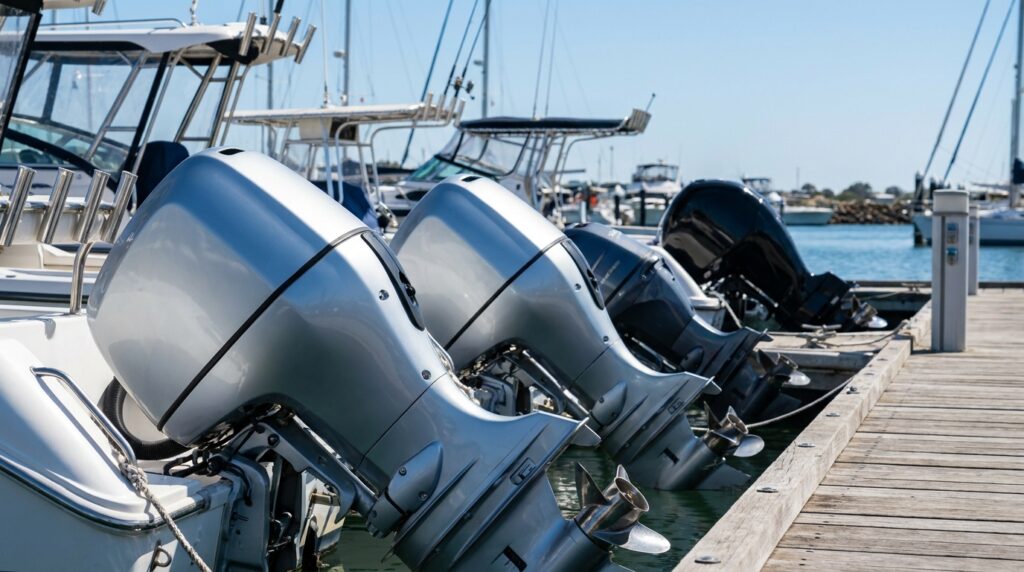
Outboard maintenance is the single biggest variable in how long your motor lasts and how often it lets you down. The mechanical components are well understood. Manufacturers have refined them for decades. What kills outboards is owner habits: skipping flushes, running old fuel, missing the annual impeller change, ignoring anodes. Get the routine right and a modern four stroke will run for fifteen to twenty years. Get it wrong and you will be looking at a powerhead rebuild inside five.
This guide covers the maintenance tasks that actually matter, in the order they matter, with a focus on Australian conditions. We sell the parts to do every job listed here, so we have included links where they help. We have also flagged the components that fail most often, and the early warning signs that tell you a part is on the way out before it strands you.
Flushing After Every Saltwater Use
If you do only one piece of maintenance on your outboard, flush it after every saltwater or brackish water trip. Salt in the cooling passages crystallises as the engine dries, and over time the build-up restricts coolant flow until the engine overheats. By the time the warning light comes on, you have already done the damage.
Flushing is simple. On smaller outboards (up to about 60 horsepower), fit a pair of muffs over the lower unit cooling intakes, connect a garden hose at full pressure, and run the engine at idle for at least 10 minutes. On larger four strokes with a built-in flush port, screw the hose fitting onto the port (no need to run the engine on most modern motors, though check your owners manual). For boats kept on a mooring or in a marina pen, flush whenever you can; even periodic flushing is better than none.
After the flush, tilt the engine fully down to drain any water from the cooling passages and the leg. Leaving water sitting in the gear case area is what causes the most aggressive corrosion damage on the lower unit.
Oil and Filter Changes for Four Strokes
Every four-stroke outboard needs an oil and filter change every 100 hours of running or once a year, whichever comes first. The annual rule matters as much as the hours one. Oil degrades through moisture and combustion byproducts even when the engine is not running, so a low-hour weekend boat still needs an annual service.
Use marine-grade NMMA FC-W certified oil only. Automotive oil foams under marine load, lacks the anti-corrosion package, and dilutes faster with fuel from extended low-RPM trolling. The cost difference is a few dollars. The cost of getting it wrong is a powerhead rebuild. Shop our outboard engine oil range for the right grade for every brand.
Warm the engine on muffs for five minutes before draining (warm oil drains faster and carries more contaminants out). Pull the dipstick to vent the system, remove the drain plug, and let it drain for at least ten minutes. Replace the oil filter at the same time (a smear of fresh oil on the new filter gasket, hand-thread, three-quarter turn past contact). Refill with the correct grade and quantity from the manual, then start on muffs and check for leaks.
Lower Unit Gear Oil
Change the lower unit gear oil at the same 100 hours or annual interval as the engine oil. The lower unit (gearcase) runs on a separate SAE 80W-90 marine gear lube that lubricates the prop shaft, the forward/reverse dog clutch, and the bevel gears that transfer power down from the driveshaft.
Gear oil is the most overlooked service on most outboards and the most expensive when it gets neglected. Pull the bottom drain plug at every annual service. If the oil that comes out is brown or milky, water has got in through a failed prop shaft or driveshaft seal. Do not refill the gearcase until the seals are replaced; running with water in the gear oil strips the gear teeth and seizes the bearings.
If the oil is clean, refill with fresh 80W-90 from the bottom drain until it runs out the top vent, then plug the top first, then the bottom. Always replace both plug washers; they cost cents and they are the only thing keeping water out. Browse our gear case parts range for plugs, washers, seals and gear oil.
Water Pump Impeller: The Most Critical Annual Job
The water pump impeller is the single most important annual service item on an outboard. It is a small neoprene wheel inside the lower unit that pumps cooling water from the lower unit up to the powerhead. It spends its life flexing thousands of times a minute. After a season or two the rubber loses its memory, the vanes fatigue, and pumping volume drops.
A failing impeller does not announce itself. The pee stream out the back keeps spitting water, but flow drops. The engine runs slightly hotter, then the head heats up faster, and one wrong day at full throttle you cook the powerhead. The cost of a new impeller kit is forty to eighty dollars. The cost of a powerhead rebuild starts at five thousand and goes up.
Replace the impeller every twelve months as a rule, regardless of hours. While the gear case is off, replace the wear plate, water pump housing, seals and gaskets. It is all one job. Do not just replace the impeller and put the same worn housing back on, because the impeller will tear itself apart against worn plate ridges within a few hours.
Fuel System Maintenance
Fuel Filters and Water Separators
The fuel filter is the cheapest insurance on the boat. A spin-on element costs less than fifty dollars and replaces in five minutes. A failed injector or carburettor caused by dirty fuel is a multi-thousand dollar repair. Change the fuel filter at every annual service.
The fuel water separator is a second-stage filter that catches water and contaminants before they reach the injectors. Inspect the clear bowl every time you fuel up. If you see water sitting at the bottom (a clear layer below the petrol), drain it through the bottom plug before you start the engine. Replace the entire separator element annually. Both filters together cost less than a hundred dollars and they are the difference between a clean fuel system and a workshop bill.
Fuel Stabiliser
Modern Australian petrol (with up to ten per cent ethanol) begins to oxidise within two weeks of being pumped. By six weeks it is gummy enough to clog jets in a carburetted engine. Use a marine fuel stabiliser at the correct dose in every tank, especially if the boat sits for more than a week between trips. The few dollars per fill saves carburettor rebuilds.
Never run E15 or E85 ethanol blends in any boat. The plastics and rubbers in marine fuel systems are not rated for high-ethanol fuel, and the lean condition E15 creates can cook older two strokes and damage exhaust valves on four strokes. Stick to 91, 95 or 98 octane with no more than ten per cent ethanol.
Carburettors and Fuel Injectors
Carburetted outboards (older two strokes and small four strokes) benefit from draining the float bowl before any lay-up longer than a few weeks. Either remove the bowl drain screw, or run the engine with the fuel line disconnected until it stalls out, which empties the bowl. Old fuel in the bowl evaporates and leaves varnish that blocks jets.
Fuel injected engines do not have the same problem because the system is sealed and pressurised. Modern injection systems need very little maintenance beyond clean fuel and clean filters. If you do have a misfire that traces to an injector, leave the actual injector service to a marine workshop with the right tools; injectors are precise components and getting dirt in them does permanent damage.
Spark Plugs and Ignition
Spark plugs are an annual replacement job on most four strokes and a two-yearly job on most two strokes. Even a plug that still fires has worn electrodes that misfire under load, which costs you fuel economy and performance long before you actually notice a problem. New marine spark plugs cost less than a tank of fuel.
Use only marine-rated plugs in the heat range specified for your engine. Automotive plugs in the same physical size run too hot in marine load and pre-ignite, which is a fast way to drop a piston. Check the gap before fitting, torque to the manufacturer spec (overtightening cracks the porcelain or strips the head thread), and apply a touch of anti-seize on the threads for next time.
Inspect the HT leads or coil packs at the same time. Cracking or stiffening in the insulation lets moisture in and creates intermittent misfires. Older outboards with separate coils and leads are easier to diagnose than newer integrated coil-on-plug designs, but both wear with age.
Anodes and Corrosion Protection
Sacrificial anodes are the most important corrosion protection on the outboard. They are small metal blocks (usually aluminium, sometimes zinc or magnesium) bolted to the lower unit, the cavitation plate, the trim ram and on some engines the powerhead itself. Their job is to corrode preferentially, so that the expensive metal around them does not.
Inspect anodes at every haul-out, or at least twice a year. Replace any anode that has worn down by fifty per cent or more. The metal you choose matters: aluminium anodes for saltwater and brackish water, magnesium anodes for freshwater (lakes and dams). Zinc still works in saltwater but aluminium has largely replaced it because it provides slightly more protection and is more environmentally friendly. The wrong anode metal can be worse than no anode at all in freshwater. Browse our marine anodes range, organised by engine brand.
Anodes in tropical Australian waters wear roughly twice as fast as in temperate southern waters. Carry a spare set on the boat and check them after every long trip to the Top End. Do not paint over anodes or coat them with anything; they need direct contact with the water to do their job.
Maintenance Quirks by Brand
Every outboard brand shares the same fundamental maintenance schedule, but each has quirks worth knowing.
Yamaha Four Strokes
Famously low-maintenance, but the F40, F50, F60 and F70 range have a known weakness in the lower-unit prop shaft seal. Check the gear oil for water at every service and address any milky oil immediately. Yamaha-specific service parts are easy to find aftermarket; shop the Yamaha brand range.
Mercury Four Strokes
The supercharged Verado range (200 to 400 horsepower) needs 25W-40 oil rather than the 10W-30 most outboards run. Mercury’s salt-shield internal flushing is excellent but does not replace the need to flush the cooling passages after saltwater use. Mercury parts are widely available aftermarket.
Suzuki Four Strokes
The DF150 and up have a lean-burn fuel system that runs cleaner and is more fuel-efficient than competitor designs. The trade-off is a tighter tolerance for fuel quality, so use a fuel water separator and change filters more often if you fuel up at less-trafficked marinas. Browse Suzuki parts.
Honda Four Strokes
Honda BF series share design heritage with Honda automotive engines and have an excellent reliability reputation. The BF250 has a known quirk with the integrated trim/tilt seal that can leak after about ten years; check trim fluid level annually. Honda parts are available across the range.
Two Strokes (Suzuki DT, Yamaha E, Tohatsu, Johnson, Evinrude)
Two strokes do not need scheduled oil changes because the oil is consumed with the fuel. What matters is using a quality NMMA TC-W3 oil and keeping the injection reservoir topped up. Carburettor cleaning every two years is a good idea on any carburetted two stroke, and the Tohatsu range in particular benefits from a fresh carb kit at the five-year mark.
Outboard Maintenance Schedule Summary
Here is the consolidated schedule. Halve these intervals for tropical conditions, bar crossings or commercial use.
| When | What to Do |
|---|---|
| Every trip | Visual check, oil level on four strokes, battery terminals, anodes, prop for fishing line |
| After every salt or brackish use | Flush the engine on muffs or via flush port for at least 10 minutes |
| Every 50 hours | Inspect fuel water separator bowl, drain water if present |
| Every 100 hours or annually | Engine oil and filter, lower unit gear oil, fuel filter, spark plugs, water pump impeller and housing kit, anode inspection, fuel water separator element |
| Every 200 to 300 hours | Thermostat, propshaft inspection, fuel injector inspection on EFI engines |
| Every 500 to 600 hours | Valve clearance check, full carburettor rebuild on carburetted engines |
| Before lay-up (more than 6 weeks) | Stabiliser in fuel, fog cylinders, drain water systems, disconnect battery |
Commercial and Charter Use Schedules
Charter operators, commercial fishermen, dive operators and oyster farmers run their outboards much harder than recreational owners. Charter motors regularly clock 1000 to 1500 hours a year. Commercial fishing motors can do 2000. The standard 100-hour service interval becomes a six-week service interval at that workload.
If you run a commercial operation, the practical schedule looks like this: oil and filter at 50 hours, lower unit gear oil at 100 hours, impeller at 150 hours, fuel filter at 100 hours, spark plugs at 200 hours, full anode replacement at 250 hours, and a workshop service every 500 hours. The hour count moves much faster than the calendar, so calendar-based servicing does not work.
Marine workshops, dealers and mobile mechanics can apply for a Victory Parts trade account for member pricing, priority dispatch and a tailored catalogue. Trade pricing on bulk impellers, filters, spark plugs and anodes pays for itself in a single season.
Outboard Maintenance FAQs
How often should I service my outboard?
Every 100 hours of running or once a year, whichever comes first. Halve that interval if you run a lot of low-RPM trolling, work shallow water with sandy or shelly bars, or operate commercially.
Can I do my own outboard maintenance?
Routine maintenance is well within reach of any owner with basic tools. Oil changes, impeller swaps, anode replacement, filter changes and spark plug changes are all owner-level jobs. Anything involving the powerhead internals, gearcase teardown, fuel injector service or hydraulic steering bleed belongs at a workshop with the right tools and diagnostic gear.
What is the most important single maintenance task?
Annual water pump impeller replacement. The impeller is what fails most often and what causes the most expensive damage when it does. Replace it every year regardless of hours, and replace the housing and wear plate at the same time.
How do I flush my outboard after saltwater use?
Fit muffs over the cooling intakes on the lower unit, connect a garden hose at full pressure, start the engine on idle, and run for at least ten minutes. On larger outboards with a built-in flush port, you can usually flush without running the engine (check your manual). Always tilt the engine fully down afterwards to drain residual water.
Can I use automotive oil in my outboard?
No. Marine engines need NMMA FC-W rated four-stroke oil or NMMA TC-W3 rated two-stroke oil. Automotive oil foams under marine load, dilutes faster with fuel from low-RPM operation, and lacks the anti-corrosion additive package marine engines need. The cost difference is small, the consequences of getting it wrong are significant.
Where can I buy outboard maintenance parts in Australia?
Victory Parts stocks aftermarket maintenance parts for every major outboard brand sold in Australia, with same-day or next-day dispatch from the Sunshine Coast. Browse by brand or by part category.
Stock Your Outboard Maintenance Kit Today
A complete annual maintenance kit for most outboards costs between two hundred and five hundred dollars in parts, depending on engine size. That includes oil, oil filter, fuel filter, fuel water separator element, water pump impeller and housing kit, spark plugs, anodes and gear oil. Doing it yourself saves between three and six hundred dollars in workshop labour.
Shop the common service items: impellers, anodes, fuel water separators, oil filters, spark plugs, outboard oils, gear case parts and fuel pumps.
All parts ship Australia-wide from our Sunshine Coast warehouse. If you are unsure which part fits your motor, send the make, model and serial to online@victoryparts.com.au and our team will match it for you. Need a wider read on routine maintenance beyond the outboard itself? See our companion guide on boat maintenance for Australian conditions.